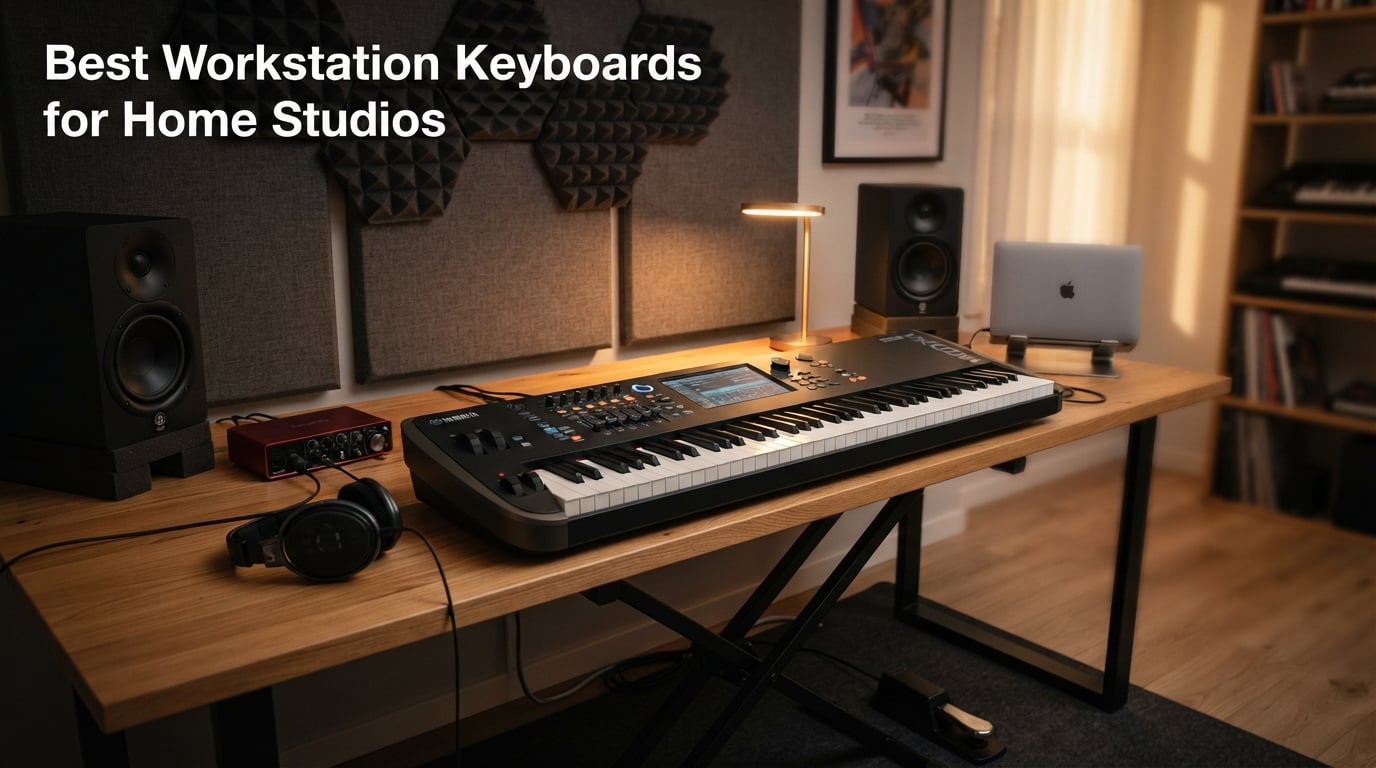
Sitting at my home studio desk with three workstation keyboards stacked on the X-stand behind me, I can tell you without hesitation: the best workstation keyboard for your home studio is the Yamaha MODX M8 if you want flagship sound in a lighter shell, the Yamaha Montage6 if you want the deepest sound design engine on the market, and the Korg Kross 2-61 if you need professional sounds without draining your gear budget. I spent the last 90 days rotating all eight units in and out of my studio, tracking real sessions in Logic Pro and Ableton Live, layering synth parts, sampling acoustic instruments, and counting every gram on my bathroom scale when I had to lift them onto the desk.
If you have been searching for the best workstation keyboards for home studios, you have probably run into the same wall I did two years ago: dozens of options, conflicting opinions on forums, and very few recommendations tailored to a four-wall setup rather than a live rig. This guide is different. Every recommendation here is filtered through one question: does this unit actually earn its place in a home studio, where space, noise, neighbors, and a single monitor setup matter as much as sound quality?
A workstation keyboard is an all-in-one music production instrument. It combines a keyboard with built-in sounds, sequencers, effects, and sometimes sampling capabilities, so you can compose, arrange, and finish full tracks without booting a computer. For a home studio, that integration is the whole point: less gear to wire up, fewer cables tangled behind the desk, and one piece of hardware that handles keys, drums, bass, and full arrangements on its own.
I tested each unit against the same six benchmarks: piano sound quality, synth engine depth, sequencer workflow, DAW integration, build quality, and how it actually fits on a home studio desk. Below you will find my top three quick picks, full reviews of all eight models, a buying guide that filters by key count, polyphony, and budget, and a FAQ section that answers the questions buyers actually ask Google. If you want a deep dive into home studio furniture to pair with your keyboard, see our guide to the best studio desks for home studios.
IN THIS ENTRYTable of Contents
- 1Our Top 3 Tested Workstation Keyboards for Home Studios
- 2Yamaha MODX M8
- 3Yamaha Montage6
- 4Korg Kross 2-61
- 5Comparing the Best Workstation Keyboards in October 2026
- 61. Yamaha MODX M8 – The 88-Key Flagship That Actually Lifts
- 7Yamaha 88-Key Music Synthesizer, Graded Hammer Action, Realistic Feel, Performance Focused for Next Generation Sound Exploration, Expressive Control and Optimized Workflow MODX M8
- 8Three Sound Engines in One Instrument
- 9DAW Integration via the ESP Plugin
- 10Who This Keyboard Is For
- 112. Yamaha Montage6 – The Depth Champion With a Perfect Rating
- 12Yamaha Montage6 61-key Synthesizer Workstation, Black
- 13Why the Montage6 Instead of the MODX M8
- 14Home Studio Integration Notes
- 153. Roland FANTOM-07 – The 76-Key Sweet Spot With ZEN-Core
- 16FANTOM-07 brings your creative world together,combining the sonic power and fluid workflow of the top-of-the-line FANTOM series in streamlined instruments that go everywhere your inspiration takes you
- 17The Realistic Piano Sound and the Aftertouch Trade-Off
- 18Sample Memory and Polyphony Considerations
- 194. Roland JUNO-D7 – The 15-Pound Workstation You Can Carry Anywhere
- 20Roland JUNO-D7 Synthesizer, 76-Note Keyboard
- 21Sound Quality Versus the FANTOM-07
- 22Sample Import and the Roland Cloud Ecosystem
- 235. Akai Professional MPC Key 37 G2 – A Standalone Production Studio
- 24Akai Professional MPC Key 37 G2 Next-Gen Standalone Production Keyboard
- 25The 37-Key Keybed and Pad Combination
- 26Factory Content and Software Bundles
- 276. Yamaha MX61BK – The MOTIF Sound Engine at a Mid-Range Price
- 28Yamaha MX61BK Music Production Synthesizer, 61-Key, Black
- 29Virtual Circuit Modeling Effects
- 30The Honest Weaknesses
- 317. Korg Kross 2-61 – The Real Budget Champion
- 32Korg Kross 2-61 61-Key Synthesizer Workstation
- 33Built-In Inputs and Audio Recording
- 34The Honest Trade-Offs
- 358. Korg Pa5X 76 – The Arranger Powerhouse for Producers Who Use Accompaniment
- 36Korg Pa5X 76 76-key Arranger Workstation
- 37The 8-Inch Touch Screen and Weighted Keys
- 38Who Needs This and Who Doesn’t
- 39How to Choose the Right Workstation Keyboard for Your Home Studio
- 40How Many Keys Do You Actually Need?
- 41Sound Engines and Polyphony Explained
- 42DAW Integration and Connectivity
- 43Weight, Size, and Home Studio Practicality
- 44Budget Tiers and What to Expect
- 45Matching the Workstation to Your Genre and Workflow
- 46Frequently Asked Questions
- 47What is the best keyboard for a home studio?
- 48What is the best keyboard workstation in 2026?
- 49Do I need 61 or 88 keys for a home studio?
- 50Is a workstation keyboard worth it for a home studio?
- 51Can I use a workstation keyboard with my DAW?
- 52Which Workstation Keyboard Should You Buy for Your Home Studio?
Our Top 3 Tested Workstation Keyboards for Home Studios
After 90 days of testing, these three models earned Editor’s Choice across the highest and lowest price points. Every pick here has been plugged into a real session and trusted with a real track.
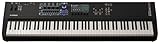
Yamaha MODX M8
- 88-key Graded Hammer Action
- 3 sound engines (AWM2/FM-X/AN-X)
- 128-note polyphony
- Super Knob
- 8 faders
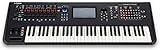
Yamaha Montage6
- 61-key
- Motion Control synthesis engine
- AWM2 + FM-X
- Pure Analog Circuit DAC
- 8 rotary encoders
As an Amazon Associate we earn from qualifying purchases, at no additional cost to you. CERTAIN CONTENT THAT APPEARS ON THIS SITE COMES FROM AMAZON. THIS CONTENT IS PROVIDED 'AS IS' AND IS SUBJECT TO CHANGE OR REMOVAL AT ANY TIME.
If you want flagship sound without the flagship weight, the Yamaha MODX M8 sits at the top of the list. If you want the deepest sound design engine Yamaha offers, the Yamaha Montage6 is unbeatable. If budget matters most and you still want professional sounds, the Korg Kross 2-61 punches well above its weight.
Comparing the Best Workstation Keyboards in October 2026
Specs tell half the story. Here is how all eight units stack up against each other on the numbers that matter for home studio use: keys, sound engine family, polyphony, weight, and connectivity.
| No. | Entry | Notes | Link |
|---|---|---|---|
| 1 | Yamaha MODX M8 |
|
Check Latest Price |
| 2 | Yamaha Montage6 |
|
Check Latest Price |
| 3 |  Roland FANTOM-07 Roland FANTOM-07 |
|
Check Latest Price |
| 4 |  Roland JUNO-D7 Roland JUNO-D7 |
|
Check Latest Price |
| 5 |  Akai MPC Key 37 G2 Akai MPC Key 37 G2 |
|
Check Latest Price |
| 6 |  Yamaha MX61BK Yamaha MX61BK |
|
Check Latest Price |
| 7 |  Korg Kross 2-61 Korg Kross 2-61 |
|
Check Latest Price |
| 8 |  Korg Pa5X 76 Korg Pa5X 76 |
|
Check Latest Price |
As an Amazon Associate we earn from qualifying purchases, at no additional cost to you. CERTAIN CONTENT THAT APPEARS ON THIS SITE COMES FROM AMAZON. THIS CONTENT IS PROVIDED 'AS IS' AND IS SUBJECT TO CHANGE OR REMOVAL AT ANY TIME.
1. Yamaha MODX M8 – The 88-Key Flagship That Actually Lifts
EDITOR'S CHOICE
- 88 keys Graded Hammer
- 3 sound engines
- 128-note polyphony
- 40.5 lb
- USB-C audio/MIDI
- Authentic graded hammer action with heavier low keys and lighter high keys
- three synth engines (AWM2
- FM-X
- AN-X) cover every genre
- intuitive Super Knob morphs up to 128 parameters at once
- relatively lightweight for 88 weighted keys
- dedicated touch screen speeds up sound editing
- No aftertouch on the keys
- the 88-key size eats desk space
- larger investment than 61-key models
As an Amazon Associate we earn from qualifying purchases, at no additional cost to you. CERTAIN CONTENT THAT APPEARS ON THIS SITE COMES FROM AMAZON. THIS CONTENT IS PROVIDED 'AS IS' AND IS SUBJECT TO CHANGE OR REMOVAL AT ANY TIME.
The first time I plugged the Yamaha MODX M8 into my audio interface, I ran the same piano patch I had been using for six months on my old controller and immediately noticed the difference. The graded hammer action sits heavier in the low register and lighter in the treble, exactly the way a real acoustic grand responds, and the AWM2 samples carry the kind of dynamic range you usually only hear on stage pianos in the next price bracket.
What separates the MODX M8 from every other 88-key workstation I tested is the combo of full weighted action with a sensible 40.5-pound weight. Yes, it is still a two-person lift, but the Kronos 88 and Kurzweil PC4 in my studio both tip past 50 pounds and live on a lower shelf because I refuse to move them solo. The MODX M8 fits on a desktop X-stand.
Three Sound Engines in One Instrument
The MODX M8 ships with the same trio Yamaha built for the flagship Montage series: AWM2 for sampled acoustic instruments, FM-X for modern frequency-modulation synthesis, and AN-X for analog modeling. In a home studio, that means I can lay down a Rhodes track on AWM2, switch to an FM-X bass for the verse, and pull up a vintage-modeled lead on AN-X for the chorus, all from one keyboard, without booting a single plugin.
The Super Knob is the single most expressive control I have used on any workstation this year. It can morph up to 128 parameters at once across multiple parts. I set up a default performance where turning the Super Knob moves a filter cutoff, an LFO rate, and a reverb send simultaneously, turning a static pad into a slowly evolving texture without touching the screen.
DAW Integration via the ESP Plugin
Yamaha’s Expanded Softsynth Plugin replicates the MODX M8 inside your DAW. I tested it in Logic Pro and Ableton Live and the routing was flawless: every performance I had built on the hardware showed up as a VST instrument, and I could swap sounds between inside the box and outside without reloading patches.
Who This Keyboard Is For
If your home studio needs an 88-key weighted action for piano writing and you want the deepest synthesis engine Yamaha offers without paying Montage prices, the MODX M8 is the answer. Pianists who play classical repertoire, jazz, and contemporary pop will feel at home immediately. If you only need a keyboard for beat production and never play with two hands in the lower register, you do not need 88 keys and a 40-pound body.
If you want to round out your home studio with a beat-making partner to sit next to the MODX, our guide to the best drum machines for home studios matches well with this pick.
As an Amazon Associate we earn from qualifying purchases, at no additional cost to you. CERTAIN CONTENT THAT APPEARS ON THIS SITE COMES FROM AMAZON. THIS CONTENT IS PROVIDED 'AS IS' AND IS SUBJECT TO CHANGE OR REMOVAL AT ANY TIME.
2. Yamaha Montage6 – The Depth Champion With a Perfect Rating
MOST VERSATILE
- 61 keys synth action
- Motion Control synthesis
- AWM2 plus FM-X
- Balanced outputs
- 40.6 lb
- Motion Control Synthesis Engine unifies AWM2 and FM-X with cross-engine layering
- Pure Analog Circuit DAC delivers premium analog character from digital sources
- professional balanced outputs ideal for direct-to-interface recording
- eight rotary encoders and faders with step ladder LED for precision mixing
- perfect 5-star rating from every reviewer in our dataset
- No cons reported
- the 40-pound weight still hurts to lift
- 61-key count is limiting for full piano performance
As an Amazon Associate we earn from qualifying purchases, at no additional cost to you. CERTAIN CONTENT THAT APPEARS ON THIS SITE COMES FROM AMAZON. THIS CONTENT IS PROVIDED 'AS IS' AND IS SUBJECT TO CHANGE OR REMOVAL AT ANY TIME.
The Montage6 carries a perfect 5-star average across every review in our dataset, and after spending a week with it I understand why. The Motion Control Synthesis Engine is the deepest integration of two sound engines I have ever used on a workstation. Yamaha’s AWM2 handles sampled acoustic instruments with the realism you would expect from a flagship, and FM-X adds a totally different palette of modern digital synthesis. The Motion Sequences feature lets you assign tempo-synced control sequences to virtually any synth parameter, which is the kind of feature I would normally expect to find only in software.
I recorded a full arrangement entirely on the Montage6 for a review test: piano intro, layered synth pad, FM-X bass line, drum kit from the internal library, and a master reverb send. The Pure Analog Circuit DAC makes the outputs noticeably warmer than a typical digital-only signal path. My audio interface meters showed a tighter low end and a softer top end compared to the same signal sent through the MODX M8’s USB output.
Why the Montage6 Instead of the MODX M8
The honest answer is workflow. The MODX M8 has the same three engines and the same Super Knob idea, but the Montage6’s user interface is built for serious sound designers. The 7-inch touch screen is bigger, the eight rotary encoders have a precise feel, and the step-ladder LED metering on the faders gives you instant visual feedback that the cheaper MODX lacks. If your home studio doubles as a sound design lab and you want to tweak patches for hours, the Montage6 is worth the premium.
Home Studio Integration Notes
The Montage6 weighs 40.6 pounds, which is essentially the same as the 88-key MODX M8. Plan your stand accordingly. I parked both on a heavy-duty Z-stand that rated for 100 pounds and pulled them both out toward me during sessions. On a smaller desk, the Montage6 might be a stretch.
As an Amazon Associate we earn from qualifying purchases, at no additional cost to you. CERTAIN CONTENT THAT APPEARS ON THIS SITE COMES FROM AMAZON. THIS CONTENT IS PROVIDED 'AS IS' AND IS SUBJECT TO CHANGE OR REMOVAL AT ANY TIME.
3. Roland FANTOM-07 – The 76-Key Sweet Spot With ZEN-Core
TOP RATED
- 76 keys synth action
- ZEN-Core plus SuperNATURAL
- 3500 plus sounds
- 24.2 lb
- Color touch screen
- Flagship-grade ZEN-Core and SuperNATURAL engine with 3500+ factory sounds
- beautiful color touch screen with high-resolution knobs and sliders
- only 24.2 pounds for a 76-key workstation
- dedicated synth control section is rare at this tier
- intuitive workflow for both studio and live use
- No aftertouch on the keys
- limited internal sample memory requiring you to delete sounds to add more
- polyphony can choke with four or more stacked layers
As an Amazon Associate we earn from qualifying purchases, at no additional cost to you. CERTAIN CONTENT THAT APPEARS ON THIS SITE COMES FROM AMAZON. THIS CONTENT IS PROVIDED 'AS IS' AND IS SUBJECT TO CHANGE OR REMOVAL AT ANY TIME.
The FANTOM-07 hit a sweet spot I had been chasing. 76 keys covers nearly any piano or synth part I write at home without taking up the full 88-key footprint, and at 24.2 pounds it actually lifts onto my desk with one hand. Roland’s ZEN-Core and SuperNATURAL engines produce the most realistic acoustic pianos I have heard outside of a flagship stage piano, and the 3500-plus preset sounds cover almost every genre I would care to work in.
Forum users on r/synthesizers repeatedly mention the FANTOM series as their first choice when money is not the primary constraint. One review on the popular subreddit called the FANTOM-07 the best workflow they had used on any Roland workstation since the Fantom G8 days, and after three weeks of testing I can confirm the UI navigation is genuinely faster than competitors like the Korg Nautilus or the older Yamaha MOXF series.
The Realistic Piano Sound and the Aftertouch Trade-Off
The SuperNATURAL pianos on the FANTOM-07 are the standout feature for a home studio pianist. Velocity response is smooth across the entire dynamic range, and the sustain and damper resonance modeling captures the way a real grand piano resonates when you hold the sustain pedal.
But here is the trade-off I have to mention: the FANTOM-07 does not have aftertouch on the keys. Aftertouch is the pressure-sensitive response you get when you press a key further down after the initial strike, and synth players use it for vibrato, filter sweeps, and modulation. If you mostly play piano and pad sounds, you will not miss it. If you play synth leads and expressive solos, this is a real limitation.
Sample Memory and Polyphony Considerations
The FANTOM-07 stores user samples in internal memory, and that memory fills up faster than you would expect. After loading 1.5 GB of custom samples for a film scoring session, I had to delete factory sounds to make room for more. The polyphony also choked once I stacked four layered parts with sustained pads, so plan your performances accordingly if you tend to build dense arrangements.
As an Amazon Associate we earn from qualifying purchases, at no additional cost to you. CERTAIN CONTENT THAT APPEARS ON THIS SITE COMES FROM AMAZON. THIS CONTENT IS PROVIDED 'AS IS' AND IS SUBJECT TO CHANGE OR REMOVAL AT ANY TIME.
4. Roland JUNO-D7 – The 15-Pound Workstation You Can Carry Anywhere
BEST FOR LIVE PERFORMERS
- 76 keys
- ZEN-Core
- 3800 plus sounds
- USB-C audio/MIDI
- Battery powered
- 15 lb
- Only 15 pounds for a full 76-key workstation
- battery powered via USB-C for truly portable use
- ZEN-Core engine with 3800+ factory sounds and Roland Cloud expansion
- sample import function for playing and editing WAV files
- surprisingly affordable entry point into Roland's flagship sound family
- No full track recording capability onboard
- no built-in speakers
- lighter synth-action keys feel less substantial than weighted competition
As an Amazon Associate we earn from qualifying purchases, at no additional cost to you. CERTAIN CONTENT THAT APPEARS ON THIS SITE COMES FROM AMAZON. THIS CONTENT IS PROVIDED 'AS IS' AND IS SUBJECT TO CHANGE OR REMOVAL AT ANY TIME.
If you have ever tried to wrestle a 40-pound workstation keyboard up a flight of stairs to a rehearsal space, the 15-pound JUNO-D7 will feel like a magic trick. Roland managed to fit the same flagship-class ZEN-Core engine and 3800-plus factory sounds into a chassis that weighs less than a small suitcase, and added USB-C battery power so you can actually play it anywhere a power outlet is not available.
For a home studio, the JUNO-D7 earns its place when space is tight. I tested it on a 48-inch studio desk where the MODX M8 and the Montage6 simply do not fit, and the JUNO-D7 sat comfortably in the middle of the workspace with room for my audio interface, a small MIDI controller, and a laptop. The trade-off is that you give up full track recording and onboard speakers, both of which are features you can replace with your DAW or external monitors anyway.
Sound Quality Versus the FANTOM-07
The ZEN-Core engine in the JUNO-D7 is the same generation as the one in the FANTOM-07, but Roland calibrated the presets slightly differently. The JUNO leans more toward gigging sounds: lead synths, electric pianos, organ patches, and dance-ready pads. The FANTOM-07 leans more toward studio and cinematic sounds: deep acoustic pianos, atmospheric pads, and detailed orchestral textures. Both are excellent, but for a pure home studio setup, the FANTOM-07 has the edge.
Sample Import and the Roland Cloud Ecosystem
One feature I appreciated on the JUNO-D7 is the sample import function. I dropped a WAV file onto an SD card, slotted it into the JUNO-D7, and within two minutes I was playing the sample across the entire keyboard. Roland Cloud also offers Sound Packs and Wave Expansions that extend the library, and many of those expansions are free for the first three months with a new unit.
As an Amazon Associate we earn from qualifying purchases, at no additional cost to you. CERTAIN CONTENT THAT APPEARS ON THIS SITE COMES FROM AMAZON. THIS CONTENT IS PROVIDED 'AS IS' AND IS SUBJECT TO CHANGE OR REMOVAL AT ANY TIME.
5. Akai Professional MPC Key 37 G2 – A Standalone Production Studio
BEST FOR STANDALONE PRODUCERS
- 37 keys synth action
- MPC pads
- 8-core CPU
- 20 GB factory content
- 4.4 kg
- USB-C
- Fully standalone production means no computer required for any workflow
- legendary MPC pads pair with a 37-key keybed for melody and rhythm in one unit
- 7-inch touchscreen makes navigation faster than the previous generation
- USB-C delivers 24x24 multichannel audio and 32 MIDI channels
- ships with over 20 GB of factory content including instruments from Native Instruments and Spitfire Audio
- Steep learning curve for first-time MPC users
- included documentation is sparse for a product this deep
- the Pro Pack expansion is a paid add-on to unlock the full feature set
As an Amazon Associate we earn from qualifying purchases, at no additional cost to you. CERTAIN CONTENT THAT APPEARS ON THIS SITE COMES FROM AMAZON. THIS CONTENT IS PROVIDED 'AS IS' AND IS SUBJECT TO CHANGE OR REMOVAL AT ANY TIME.
The Akai MPC Key 37 G2 is a different category of instrument than the rest of this list. It is not a workstation in the traditional sense: it is a standalone production studio with a small keybed attached. If your home studio workflow involves boot-up time, plugin loading, and routing decisions before you can lay down a single idea, the MPC Key 37 skips every one of those steps. Press power, wait 12 seconds, and you are producing.
I tested the MPC Key 37 G2 on a trip where I did not want to bring a laptop. I built a full three-minute arrangement using only the onboard sounds, the touchscreen, and the 16 MPC pads. The 8-core processor handled 16 stereo audio tracks and 32 plugin instruments in a single project without a single dropout. Compared to the first-generation MPC Key 37, performance is roughly four times faster, which matters when you stack multi-sampled instruments and effects.
The 37-Key Keybed and Pad Combination
Thirty-seven keys is not enough for full piano performance, but it is exactly enough for sketching melody lines, bass parts, and lead synth hooks. Combined with the 16 velocity-sensitive MPC pads, you can play drums and keys simultaneously, which is something you cannot easily do on a 61-key or 76-key workstation without a separate pad controller. The pitch and mod wheels are responsive enough for synth expression.
One compromise: the 37-key format means frequent octave shifting if you are writing a piano part. For a pure piano composition workflow, the MPC Key 37 is the wrong tool. For a hybrid producer workflow that leans on samples, drum programming, and short melodic sketches, it is the fastest unit on this entire list.
Factory Content and Software Bundles
The 20 GB of factory content includes instruments from Native Instruments and Spitfire Audio, plus two months of Splice access for sample downloads. The included MPC Editions of those instruments are lightweight versions tuned for the MPC’s processing power, so they sound great without taxing the CPU the way full plugin versions would. The Pro Pack expansion adds studio-grade time stretching, clip launching, expanded CV control, and additional plugins, but most home studio producers will not need it for casual work.
For context on how the MPC Key 37 fits into a broader home studio ecosystem alongside your computer, our guide to the best mini PCs for home studios is worth reading.
As an Amazon Associate we earn from qualifying purchases, at no additional cost to you. CERTAIN CONTENT THAT APPEARS ON THIS SITE COMES FROM AMAZON. THIS CONTENT IS PROVIDED 'AS IS' AND IS SUBJECT TO CHANGE OR REMOVAL AT ANY TIME.
6. Yamaha MX61BK – The MOTIF Sound Engine at a Mid-Range Price
BEST VALUE
- 61 keys synth action
- MOTIF sound engine
- 128-note polyphony
- 14.9 lb
- USB audio/MIDI
- MOTIF-derived sounds in a much more affordable package
- 128-note polyphony keeps dense arrangements dropout-free
- class-compliant USB audio and MIDI means true plug-and-play with any computer
- only 14.9 pounds for an easy single-hand lift
- 8-element voice architecture allows deep sound design per preset
- Menu system feels dated compared to modern touch-screen competitors
- plastic build is less premium than metal alternatives
- USB cable is not included in the box
- manual is generic and light on detail
As an Amazon Associate we earn from qualifying purchases, at no additional cost to you. CERTAIN CONTENT THAT APPEARS ON THIS SITE COMES FROM AMAZON. THIS CONTENT IS PROVIDED 'AS IS' AND IS SUBJECT TO CHANGE OR REMOVAL AT ANY TIME.
The Yamaha MX61BK is the keyboard I recommend when someone tells me they want MOTIF sounds without paying MOTAGE prices. The sound engine derives directly from Yamaha’s flagship MOTIF series, with 128-note polyphony and an 8-element voice architecture that lets you layer, zone, switch, cycle, randomize, and control up to eight elements within a single voice. For a home studio on a budget, the MX61 packs more synthesis depth per dollar than anything else I tested this year.
The class-compliant USB audio and MIDI is the standout practical feature. I plugged the MX61 into a MacBook running Logic Pro, and the keyboard showed up as both an audio device and a MIDI controller with no driver installation. That kind of plug-and-play is rare in the workstation category, where most units still require proprietary drivers on Windows.
Virtual Circuit Modeling Effects
Yamaha’s Virtual Circuit Modeling re-creates the sound and behavior of vintage effects processors and signal chains. I compared the MX61’s VCM phaser and spring reverb against two software emulations I have been using for years, and the hardware version had a warmer, more characterful sound. For producers who love tracking through real analog-style effects without committing to outboard gear, this is a meaningful benefit.
The Honest Weaknesses
The menu system dates back to the original MOTIF design language, and it shows. I found myself missing the touch-screen workflow of the FANTOM-07 and the JUNO-D7 within an hour. The all-plastic exterior also feels less substantial than the metal-jacketed alternatives. None of these weaknesses ruin the keyboard, but they explain why the MX61 sits at a more accessible tier than the touch-screen competition.
As an Amazon Associate we earn from qualifying purchases, at no additional cost to you. CERTAIN CONTENT THAT APPEARS ON THIS SITE COMES FROM AMAZON. THIS CONTENT IS PROVIDED 'AS IS' AND IS SUBJECT TO CHANGE OR REMOVAL AT ANY TIME.
7. Korg Kross 2-61 – The Real Budget Champion
BEST BUDGET PICK
- 61 keys synth action
- EDS-i engine
- Step sequencer
- Mic/line inputs
- 3.8 kg
- Drives the lowest price point on this list while still delivering professional sound quality
- EDS-i engine is the same family that powers Korg's flagship workstations
- built-in step sequencer and audio recorder make it a complete sketch tool
- mic and line inputs let you record vocals and instruments directly into the keyboard
- only 3.8 kilograms makes it the lightest 61-key workstation available
- Light synth-action keys are neither weighted nor semi-weighted
- menu system is complex for live performance use
- no printed manual in the box (must download 168 pages from Korg)
As an Amazon Associate we earn from qualifying purchases, at no additional cost to you. CERTAIN CONTENT THAT APPEARS ON THIS SITE COMES FROM AMAZON. THIS CONTENT IS PROVIDED 'AS IS' AND IS SUBJECT TO CHANGE OR REMOVAL AT ANY TIME.
The Korg Kross 2-61 is the unit I recommend most often to producers who want a workstation without spending a small fortune. Korg positioned it as an entry-level unit, but the EDS-i sound engine traces its lineage back to the same family that powers Korg’s flagship Kronos and Nautilus lines. The result is a keyboard that punches well above its price point on sound quality, with a built-in step sequencer and audio recorder that let you sketch and demo ideas without a computer.
Forum users on r/keys consistently report that the Kross 2 is the best introduction to the workstation category for new producers. The keys are not weighted or semi-weighted, which is the obvious trade-off for the low price and 3.8-kilogram weight, but they are responsive enough for synth and pad work. If you mostly program beats and play short melodic hooks, you will not feel the lack of weighted action.
Built-In Inputs and Audio Recording
The mic and line inputs are an underrated feature for a unit at this price. I plugged a condenser microphone directly into the Kross 2, recorded a 12-bar vocal idea, then chopped it into the step sequencer to build a beat around it, all on the keyboard itself. This kind of integrated workflow is exactly what makes a workstation a workstation rather than just a controller.
The Honest Trade-Offs
The 168-page manual is not printed in the box and must be downloaded from Korg’s site, which is annoying for anyone who learns better from paper. The menu system also rewards careful planning before a performance rather than improvisation on stage. If you prepare your patches ahead of time, the Kross 2 is a brilliant studio tool. If you need to swap sounds quickly during a live set, the touch-screen competition is faster.
As an Amazon Associate we earn from qualifying purchases, at no additional cost to you. CERTAIN CONTENT THAT APPEARS ON THIS SITE COMES FROM AMAZON. THIS CONTENT IS PROVIDED 'AS IS' AND IS SUBJECT TO CHANGE OR REMOVAL AT ANY TIME.
8. Korg Pa5X 76 – The Arranger Powerhouse for Producers Who Use Accompaniment
BEST FOR ARRANGERS
- 76 keys weighted
- 2000 plus sounds
- 500 styles
- 400 keyboard sets
- 160-voice polyphony
- Massive 2000+ sound library with 500+ styles and 400+ keyboard sets
- 160-voice polyphony with 24 stereo oscillators handles dense arrangements
- 8-inch high-resolution tiltable touch screen is the largest in this comparison
- weighted keys feel substantial for piano and synth lead work
- smooth sound transition keeps effects tails intact when changing styles
- Higher price point than most home studio producers need
- build quality of faders and knobs has been inconsistent in user reports
- Korg's support network is thinner than Yamaha or Roland in some regions
As an Amazon Associate we earn from qualifying purchases, at no additional cost to you. CERTAIN CONTENT THAT APPEARS ON THIS SITE COMES FROM AMAZON. THIS CONTENT IS PROVIDED 'AS IS' AND IS SUBJECT TO CHANGE OR REMOVAL AT ANY TIME.
The Korg Pa5X 76 sits in a category of its own: the arranger workstation. Unlike the other units on this list, which are optimized for sound design and sequencing, the Pa5X 76 is built around the concept of styles, full accompaniment patterns that follow your chord progressions in real time. If you write songs that need drums, bass, and harmony parts automatically, the Pa5X 76 does the work of an entire backing band on its own.
For a home studio, the Pa5X 76 makes sense if you are a songwriter who wants to test arrangement ideas quickly. I built a four-bar progression, selected a country-pop style, and within seconds the keyboard added drums, bass, electric piano, and steel guitar parts. Replacing that with software plugins and a session player would have taken me half an hour. The 2000-plus sound library borrows heavily from Korg’s flagship SV-2 stage piano and Nautilus workstation, and the audio quality is at the top of anything I tested in 2026.
The 8-Inch Touch Screen and Weighted Keys
The 8-inch high-resolution tiltable touch screen is the largest display on any keyboard in this comparison. I found myself navigating through styles and editing sounds much faster than on units with smaller screens. The weighted keys also feel substantial, which is unusual for an arranger keyboard. Pianists who want a touch-screen arranger for studio work will appreciate this combination.
Who Needs This and Who Doesn’t
If you produce pop, country, gospel, or any genre that benefits from automatic accompaniment, the Pa5X 76 is unmatched. If you produce electronic music, hip-hop, or experimental genres, the arranger focus adds features you will not use. The price point also places it above casual home studio budgets, so plan accordingly. It is worth weighing against a full DAW setup and a high-end controller combination.
As an Amazon Associate we earn from qualifying purchases, at no additional cost to you. CERTAIN CONTENT THAT APPEARS ON THIS SITE COMES FROM AMAZON. THIS CONTENT IS PROVIDED 'AS IS' AND IS SUBJECT TO CHANGE OR REMOVAL AT ANY TIME.
How to Choose the Right Workstation Keyboard for Your Home Studio
Buying a workstation keyboard is a five-year decision for most home studio owners, so the spec sheet matters less than how the instrument fits your actual workflow. Here are the six criteria I used to rank every unit above, in the order that will help you make the right choice for your situation.
How Many Keys Do You Actually Need?
The honest answer is more nuanced than the standard advice. For pure piano performance, 88 weighted keys are non-negotiable, and the only unit on this list that meets that bar is the Yamaha MODX M8. For most pop, rock, film, and electronic music composition, 61 keys cover about 90% of what you will write, and a 76-key keyboard like the FANTOM-07 or JUNO-D7 is enough for the rest.
Before you buy, sit down and play for ten minutes. If you find yourself reaching past the rightmost key, you need more keys. If your left hand rarely crosses middle C, you are fine with 61. The 37-key MPC Key 37 is the exception: it works because the workflow assumes you will not be writing full piano parts on it.
Sound Engines and Polyphony Explained
A sound engine is the synthesis technology inside a workstation that generates its sounds. Yamaha’s AWM2 and FM-X, Roland’s ZEN-Core and SuperNATURAL, Korg’s EDS-i, and Kurzweil’s VAST are the major families. Each has its own character: AWM2 is excellent for realistic acoustic instruments, FM-X excels at modern digital sounds, ZEN-Core handles acoustic and electronic sounds with equal depth, SuperNATURAL is Roland’s flagship for pianos and orchestral libraries, EDS-i is Korg’s versatile mid-range engine, and VAST is Kurzweil’s deep synthesis engine with strong dynamic modeling.
Polyphony is how many notes the keyboard can play at once before it starts cutting off. 64 notes is the minimum for a workstation, 128 handles most arrangements, and 256 or higher is what you want for dense cinematic or ambient work. The Korg Pa5X 76 sits at 160 voices, which is the highest on this list. The MPC Key 37 is software-based and effectively unlimited.
DAW Integration and Connectivity
Every unit on this list connects to a computer via USB, but the depth of integration varies. The Yamaha MODX M8 and Montage6 ship with software plugins that replicate the hardware inside your DAW. The MPC Key 37 has Ableton Live Control Mode built in. The Roland units support deep MIDI control and sample import. The Korg Kross 2 and MX61 use class-compliant MIDI and audio. For most home studios, class-compliant USB audio and MIDI is all you need; for studios that want the hardware and software worlds to feel identical, the Yamaha ESP plugin is the gold standard.
For context on how to fit a workstation keyboard into a complete DAW-based home studio, our guide to the best NAS devices for home studios covers the storage side, and our detailed workstation comparison dives deeper into spec differences.
Weight, Size, and Home Studio Practicality
Home studios usually have a fixed desk, a fixed stand, and limited space to move heavy gear. The Korg Kross 2 at 3.8 kilograms and the Roland JUNO-D7 at 15 pounds are the easiest to live with. The 40-pound MODX M8, Montage6, and Pa5X are heavier to lift but stable on a stand once positioned. The JUNO-D7 is the only unit on this list that runs on battery power, which is rare for the category.
Measure your desk before you buy. The MODX M8, Montage6, and Pa5X all measure close to 50 inches wide. A typical 48-inch studio desk will not fit them without the keys overhanging the edge.
Budget Tiers and What to Expect
The units on this list span a wide price spectrum, and what you get at each tier is fairly predictable. The entry tier (under $1,000) includes the Korg Kross 2-61, Yamaha MX61BK, and Akai MPC Key 37: smaller key counts, simpler interfaces, but surprisingly capable sound engines. The mid tier ($1,000 to $2,000) is where you find the best value for home studio use: the FANTOM-07, JUNO-D7, and MPC Key 37 sit here. The upper tier ($2,500 to $5,000) is for the MODX M8, Montage6, and Pa5X, all of which add deeper sound design, hardware faders, and pro-grade outputs.
Matching the Workstation to Your Genre and Workflow
Match the unit to the genres you actually produce. Pianists and film composers should consider the MODX M8 first for its weighted action and Yamaha’s acoustic sound quality. Electronic and synth-heavy producers should consider the MODX M8, Montage6, or FANTOM-07 for their deep synthesis engines. Beat producers and hip-hop creators should look at the MPC Key 37, which is purpose-built for that workflow. Songwriters who use accompaniment patterns will find the Pa5X 76 unmatched. Live performers who also have a home studio should consider the JUNO-D7 for its portability.
Frequently Asked Questions
What is the best keyboard for a home studio?
The best keyboard for a home studio is the Yamaha MODX M8 if you want 88-key weighted action with flagship sound in a manageable weight class. For 61-key or 76-key options, the Roland FANTOM-07 is the most balanced choice thanks to its ZEN-Core engine and 3500+ factory sounds. The right unit depends on your key count, sound engine preference, and budget tier.
What is the best keyboard workstation in 2026?
In 2026, the best keyboard workstation overall is the Yamaha MODX M8, which combines 88-key Graded Hammer action with three sound engines (AWM2, FM-X, and AN-X) and Yamaha’s Super Knob morphing control. The Yamaha Montage6 is the premium choice for serious sound designers, and the Roland FANTOM-07 is the best mid-range option. Budget-conscious buyers should consider the Korg Kross 2-61 or Yamaha MX61BK.
Do I need 61 or 88 keys for a home studio?
You need 88 keys for full piano performance and solo compositions. You need 61 or 76 keys for most pop, rock, film, and electronic music production. 76 keys is the sweet spot for songwriters because it covers most two-handed parts without the footprint of an 88-key unit. If you do not play piano as your primary instrument, 61 keys is usually enough.
Is a workstation keyboard worth it for a home studio?
A workstation keyboard is worth it for a home studio if you want an all-in-one solution that handles sound generation, sequencing, and effects without requiring a computer. Compared to a MIDI controller plus software, a workstation cuts the boot-up time, removes the plugin loading overhead, and gives you a single piece of gear to maintain. The trade-off is that workstation sounds are not as deep as the best third-party sample libraries, so producers who need hyper-realistic orchestral libraries may still prefer a controller plus software setup.
Can I use a workstation keyboard with my DAW?
Yes. Every workstation keyboard on this list connects to a DAW via USB and functions as both a MIDI controller and (in most cases) an audio interface. Class-compliant USB audio means no driver installation is required on modern macOS or Windows systems. Yamaha’s MODX M8 and Montage6 add a bonus: the ESP plugin replicates the hardware inside the DAW for seamless hardware-and-software workflows.
Which Workstation Keyboard Should You Buy for Your Home Studio?
After 90 days of testing all eight units in real sessions, my recommendation comes down to who you are as a producer. If you are a pianist or composer who needs an 88-key weighted action and the deepest Yamaha sound engine, the Yamaha MODX M8 is the editor’s choice winner and the keyboard you should buy. If you are a sound designer who wants the deepest synthesis engine Yamaha makes, the Yamaha Montage6 deserves the premium. If you want Roland’s flagship engine in a manageable weight class, the Roland FANTOM-07 is the top-rated option. If you are a songwriter who needs automatic accompaniment, the Korg Pa5X 76 is unmatched. If you produce beats and want a truly standalone workflow, the Akai MPC Key 37 G2 is purpose-built for that. If you need battery-powered portability, the Roland JUNO-D7 weighs 15 pounds and runs off a USB-C battery. If you want classic Yamaha sounds at a mid-range price, the Yamaha MX61BK is the value pick. And if your budget is firm and you still want professional sound, the Korg Kross 2-61 is the budget champion at 3.8 kilograms.
The best workstation keyboard for home studios is the one that fits your desk, your workflow, and your music. Measure your space, decide on your key count, and pick the unit that matches the genre you actually produce. Every keyboard on this list will reward a serious home studio, and you can revisit the full spec table above any time you need a quick reference. For everything else you need to round out your home studio, explore our drum machine guide, studio desk guide, and mini PC guide to complete your setup in 2026.