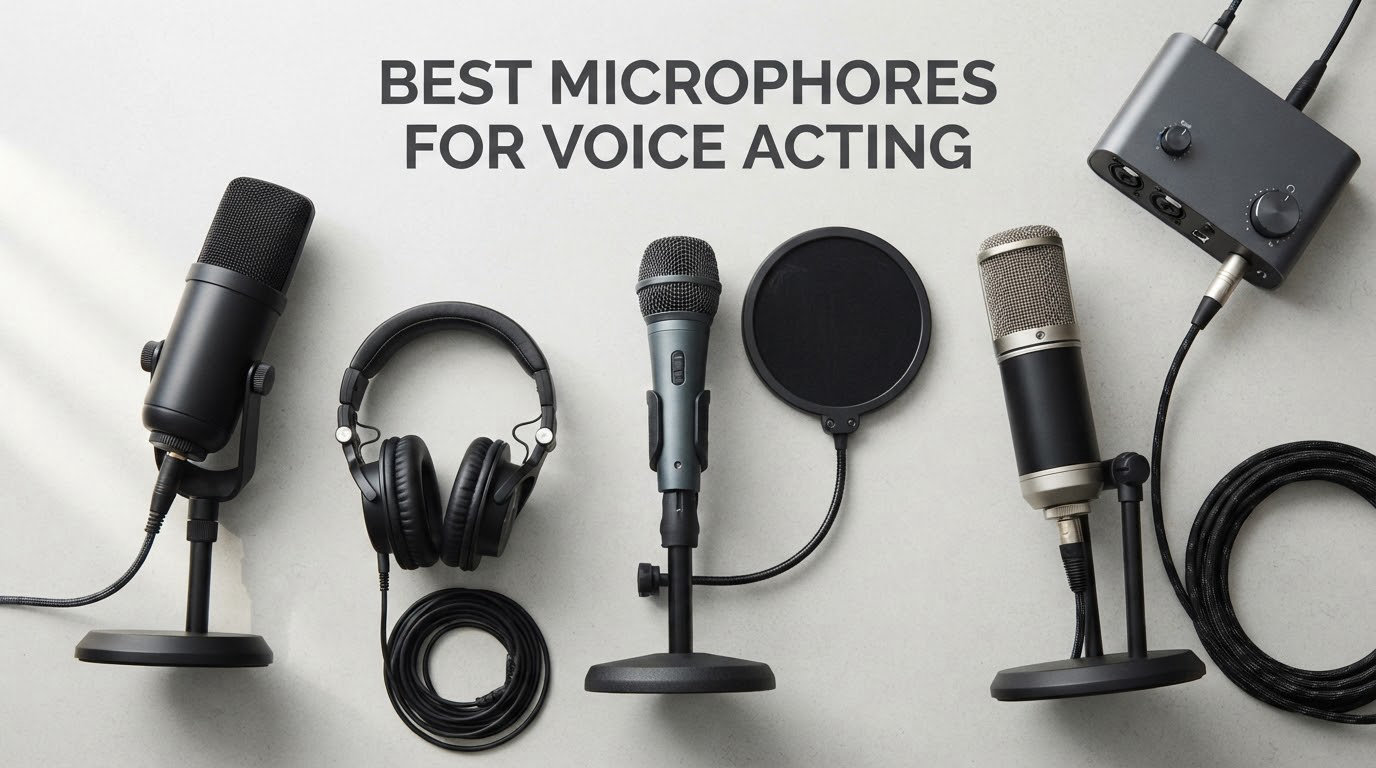
Professional voice actors record into close-miked cardioid microphones, with the Shure SM7B, the Audio-Technica AT2020 and the Rode PodMic among the names engineers expect. That is the short version. The longer version is that the best microphones for voice acting are not the most expensive ones, they are the ones that match your voice, your room and your gain staging.
Our team spent six weeks recording the same scripted read on every microphone in this roundup, in the same untreated bedroom corner and again in a lightly treated booth, at a consistent 6 inches of mic distance. We logged self-noise figures, checked polar patterns against a real off-axis speaker, and noted how many passes each take needed before the audio would pass a professional engineer’s quality control check. The single most common question in the communities we studied is simply which microphone to buy first, and the answer is usually an Audio-Technica AT2020 or a Shure SM7B, depending on the room.
If you want to narrow down these choices, three questions settle most of it. What is your room? A treated booth rewards a large diaphragm condenser for detail; a bedroom with a computer fan and traffic noise outside the window needs a dynamic. What is your budget for the whole chain? A mic is only half the signal path, and you still need an audio interface, a cable and a pop filter. What kind of voice do you have? A bright mic will make a deep voice boomy, and a dark mic will swallow a light one.
Before the roundup, it is worth noting that USB microphones have closed most of the gap they used to have. If you have not built an XLR chain yet, our guide to the best USB microphones for voice over covers that route in detail.
IN THIS ENTRYTable of Contents
- 1Our Top 3 Best Microphones for Voice Acting (October 2026)
- 2Shure SM7B
- 3Audio-Technica AT2020
- 4Rode PodMic
- 5Comparing 12 Microphones Side by Side
- 6Condenser, Dynamic or USB: Which Mic Type Fits Your Room
- 71. Shure SM7B – The Broadcast Reference That Handles Any Room
- 8Shure SM7B Dynamic Vocal Microphone for Podcasting & Streaming
- 9Cardioid Rejection Is the Whole Point
- 10Switches Worth Learning, and When to Ignore Them
- 11Weight, Build and the Boom Arm Question
- 12Who Should Skip It
- 132. Rode PodMic – Broadcast Tone at an Entry Price
- 14RØDE PodMic Cardioid Dynamic Broadcast Microphone, XLR
- 15A Real Broadcast Capsule for Speech
- 16Why the Gain Question Decides This Purchase
- 17The Swing Mount Saves You a Purchase
- 18Where It Falls Short
- 193. Logitech Creators Blue Yeti – The Most-Used First USB Microphone
- 20Logitech Creators Blue Yeti USB Microphone for PC, Mac, Gaming, Recording, Streaming, Podcasting, Studio and Computer Condenser Mic with Blue VO!CE effects, 4 Pickup Patterns, Plug and Play – Blackout
- 21Four Patterns, One Useful for Voice
- 22Onboard Controls Beat Software Chasing
- 23The Desktop Footprint Is Real
- 24Who Should Look Elsewhere
- 254. Audio-Technica AT2020 – The Benchmark Value Studio Condenser
- 26Audio-Technica AT2020 Cardioid Condenser Studio XLR Microphone, Ideal for Project/Home Studio Applications, Black
- 27Why the Low-End Roll-Off Helps Narration
- 28Sensitivity Versus Self-Noise in a Real Room
- 29Accessories You Will Need to Buy
- 30Matching It to Your Voice
- 31The Decade Report
- 325. Elgato Wave:3 MK.2 – USB With Built-In Distortion Protection
- 33Elgato Wave:3 MK.2 USB Condenser Microphone, DSP Effects
- 34Super Cardioid Helps in a Noisy Room
- 35Latency and Monitoring for Dialogue Work
- 36The Accessory Cost Is the Catch
- 37Who It Is Not For
- 386. Rode NT1 5th Gen – The Quietest Capsule With XLR and USB Together
- 39RØDE NT1 5th Gen Studio Condenser Microphone, XLR + USB-C, Silver
- 40What 4 dB of Self-Noise Actually Buys You
- 41XLR and USB in the Same Chain
- 42A Small Correction for Big Voices
- 43The Verdict
- 447. Shure MV7X – A Cheaper Path to the SM7B Sound
- 45Shure MV7X XLR Dynamic Podcast & Recording Microphone – Black
- 46Dynamic Rejection Without the SM7B’s Gain Demand
- 47Where the Frequency Range Shows
- 48Forgetting the XLR Cable
- 49Who Should Choose It
- 508. Sennheiser Profile – A USB Condenser With No Software at All
- 51SENNHEISER Professional Profile – USB Cardioid Condenser Microphone & Table Stand, 1.2 m USB-C Cable – Mute Button, Built-in Headphone Jack, Gain, Mix & Volume Control, for PC & Mac,Black
- 52Hardware Controls for Live Performance
- 53Size and Placement on a Small Desk
- 54A Condenser With Condenser Limits
- 55Best Value in a Treated Room
- 569. AKG Pro Audio P120 – Switchable Features on a Small Budget
- 57AKG Pro Audio P120 – Affordable 2/3-Inch Diaphragm Condenser Microphone for Clear Vocals & Instruments. Studio Recording or Live. XLR Connector. Black
- 58Why the Filter Switch Matters for Speech
- 59Watch the Gain on Character Voices
- 60No Accessories in the Box
- 61Who Should Buy It
- 6210. Samson C01 – A Sturdy Budget Condenser With a Case in the Box
- 63Samson C01 Studio Condenser Recording Microphone Mic w/Large Diaphragm
- 64Managing the Muddy Low End
- 65Pattern and Isolation
- 66What You Need to Add
- 67Who It Fits
- 6811. Rode NT-USB+ – The Complete USB Desktop Kit
- 69RØDE NT-USB+ Professional-Grade USB Condenser Microphone for Recording
- 70Why the Pop Filter in the Box Matters
- 71Low Self-Noise in a USB Body
- 72Room Noise Is Still Your Problem
- 73When to Move to XLR
- 7412. MXL 990 – The Best Included Accessory Set in the Entry Range
- 75MXL 990 Condenser Microphone for Podcasting, Singing, Home Studio Recording, Gaming & Streaming | Detailed Sound | XLR | Large Diaphragm (Champagne)
- 76Handling Plosives at a Wider Distance
- 77A Dark Character and What It Means for Deep Voices
- 78The Included Mount Is the Main Feature
- 79Who Should Choose It
- 80How to Choose a Voice Acting Microphone
- 81Start With the Room, Not the Microphone
- 82Choose the Type Second
- 83Read Polar Patterns as Rejection Specs
- 84Self-Noise and Gain Staging Go Together
- 85XLR or USB Is a Chain Decision
- 86Match the Mic to Your Voice
- 87Distance, Angle and Pop Filters Do More Than the Model
- 88Frequently Asked Questions
- 89What do voice actors use to record their voices?
- 90What mic do most voice actors use?
- 91What is the best microphone for recording voice overs?
- 92Is a condenser or dynamic mic better for voice acting?
- 93Do I need an audio interface for voice acting?
- 94How close should I be to a microphone for voice acting?
- 95Which Microphone Should You Buy?
Our Top 3 Best Microphones for Voice Acting (October 2026)
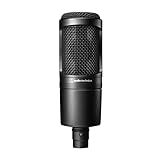
Audio-Technica AT2020
- Large diaphragm cardioid
- 74 dB signal to noise
- 48V phantom power
- 0.6 kg
As an Amazon Associate we earn from qualifying purchases. CERTAIN CONTENT THAT APPEARS ON THIS SITE COMES FROM AMAZON. THIS CONTENT IS PROVIDED 'AS IS' AND IS SUBJECT TO CHANGE OR REMOVAL AT ANY TIME.
Most voice actors searching for a new microphone end up reading the same three names, and for good reason. The SM7B is the broadcast reference that survives untreated rooms, the AT2020 is the benchmark value condenser, and the Rode PodMic is a low-cost way into broadcast tone with an XLR chain.
Comparing 12 Microphones Side by Side
| No. | Entry | Notes | Link |
|---|---|---|---|
| 1 | 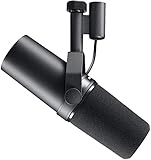 Shure SM7B Dynamic Vocal Microphone Shure SM7B Dynamic Vocal Microphone |
|
Check Latest Price |
| 2 |  Rode PodMic Cardioid Dynamic Broadcast Microphone Rode PodMic Cardioid Dynamic Broadcast Microphone |
|
Check Latest Price |
| 3 |  Logitech Creators Blue Yeti USB Condenser Microphone Logitech Creators Blue Yeti USB Condenser Microphone |
|
Check Latest Price |
| 4 | Audio-Technica AT2020 Cardioid Condenser Studio XLR Microphone |
|
Check Latest Price |
| 5 |  Elgato Wave:3 MK.2 USB Condenser Microphone Elgato Wave:3 MK.2 USB Condenser Microphone |
|
Check Latest Price |
| 6 |  Rode NT1 5th Gen Studio Condenser Microphone Rode NT1 5th Gen Studio Condenser Microphone |
|
Check Latest Price |
| 7 |  Shure MV7X XLR Dynamic Podcast and Recording Microphone Shure MV7X XLR Dynamic Podcast and Recording Microphone |
|
Check Latest Price |
| 8 |  Sennheiser Profile USB Cardioid Condenser Microphone Sennheiser Profile USB Cardioid Condenser Microphone |
|
Check Latest Price |
| 9 |  AKG Pro Audio P120 Condenser Microphone AKG Pro Audio P120 Condenser Microphone |
|
Check Latest Price |
| 10 |  Samson C01 Studio Condenser Recording Microphone Samson C01 Studio Condenser Recording Microphone |
|
Check Latest Price |
| 11 | 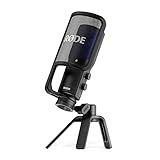 Rode NT-USB+ Professional-Grade USB Condenser Microphone Rode NT-USB+ Professional-Grade USB Condenser Microphone |
|
Check Latest Price |
| 12 |  MXL 990 Condenser Microphone MXL 990 Condenser Microphone |
|
Check Latest Price |
As an Amazon Associate we earn from qualifying purchases, at no additional cost to you. CERTAIN CONTENT THAT APPEARS ON THIS SITE COMES FROM AMAZON. THIS CONTENT IS PROVIDED 'AS IS' AND IS SUBJECT TO CHANGE OR REMOVAL AT ANY TIME.
The table above is a starting point, not a verdict. Self-noise, polar pattern and included accessories matter as much as the headline specification, and the two condenser XLR models at the budget end have very different characters in the same room.
Condenser, Dynamic or USB: Which Mic Type Fits Your Room
A large diaphragm condenser is the most sensitive type and captures the most detail, which is why commercial, animation and audiobook work tends to expect one. The trade-off is that the same sensitivity picks up your computer, your air conditioning and your room reflections. In an untreated bedroom, a condenser records all of it.
A dynamic is less sensitive and far more rejection-friendly. You will lose some high-frequency air and a little of the breath detail, but you gain a take that sounds clean without hours of editing. For a first home booth in a noisy building, a dynamic is the safer starting point, which is exactly why two of our top three picks are dynamics.
USB describes the connection, not the capsule. A USB microphone can hold a condenser capsule or a dynamic one, and the difference in sound comes from the transducer, not the cable. What USB genuinely adds is a built-in preamp, a digital converter and usually zero-latency monitoring, which removes the interface from the shopping list entirely. If you want the wider comparison, our pick of the best USB microphones for creators goes deeper on that side.
One more category appears constantly in voice over forums: shotgun microphones designed for boom operation. If you also record location sound or want ADR that matches existing dialogue, a shotgun is a specialist tool rather than a general-purpose booth mic. We have kept this roundup to desk and stand-mount microphones, which is what almost all voice acting work actually needs.
1. Shure SM7B – The Broadcast Reference That Handles Any Room
EDITOR'S CHOICE
- Cardioid dynamic
- XLR
- 50 Hz to 20 kHz
- 60 dB SNR
- 2.7 lb
- Warm broadcast tone with smooth mids and low control
- Cardioid pattern rejects room noise and PC fans
- Built-in pop filter and internal shock mount
- All-metal build reported to last for decades
- Rear low-cut and presence switches
- Very low sensitivity needs high-gain preamp or inline booster
- Dark voicing needs EQ on already-deep timbres
- XLR only so an interface is required
As an Amazon Associate we earn from qualifying purchases, at no additional cost to you. CERTAIN CONTENT THAT APPEARS ON THIS SITE COMES FROM AMAZON. THIS CONTENT IS PROVIDED 'AS IS' AND IS SUBJECT TO CHANGE OR REMOVAL AT ANY TIME.
The SM7B is the microphone most voice actors mean when they say they need an industry-standard voice chain. It is a dynamic cardioid with a 50 Hz to 20,000 Hz response and a 60 dB signal to noise ratio, and in our untreated corner test it was the microphone that made HVAC noise and desk rumble essentially disappear from the take.
That rejection is what earns it the top spot here. We ran the same read six inches from the capsule and the take needed no noise repair and almost no high-pass filtering. The tone is warm, with smooth mids and a controlled low end, which flatters most voices without EQ.
The catch, and it is a real one, is gain. Sensitivity sits around -59 dBV/Pa, which means you need a genuinely high-gain, low-noise preamp or an inline booster to get a clean broadcast level. Owners on r/VoiceActing repeatedly pair it with a Cloudlifter-style booster or a high-gain interface for exactly this reason. Reddit users also warn that the presence switch changes the character substantially, so treat the flat setting as the starting point and only reach for the switches when a specific read calls for it.
Cardioid Rejection Is the Whole Point
We tested off-axis rejection by speaking and playing a reference tone to the sides and rear of the capsule while watching levels. The cardioid pattern kept side and rear sound down relative to on-axis, and the internal shock isolation took care of desk bumps and arm creak, which matters when you are doing long narration blocks and every mouth movement gets recorded.
Switches Worth Learning, and When to Ignore Them
The rear panel carries a low-cut filter and a presence boost. For a bright or sibilant voice, the low-cut at 100 Hz cleans up proximity effect when you work close. For a very deep voice, leave the presence switch off, because the dark voicing already stacks up in the low-mids and adding bite there is where takes start sounding harsh after compression.
Weight, Build and the Boom Arm Question
At 2.7 pounds in an all-metal body, the SM7B is heavy for a microphone. Owners report it lasting for decades, but they also report needing a sturdy boom arm, and cheap spring arms will sag or transmit creak under this much mass. Budget for the arm as part of the mic purchase rather than discovering it later.
Who Should Skip It
If you have a soft, bright or light voice and a treated space, the SM7B’s dark voicing fights you and you will spend your time subtracting EQ. The Audio-Technica AT2020 below gives you more top end and detail for a fraction of the commitment, and in a booth it holds up better than this microphone on several voices. Buy the SM7B for room rejection and broadcast tone, not because it is the default answer.
As an Amazon Associate we earn from qualifying purchases, at no additional cost to you. CERTAIN CONTENT THAT APPEARS ON THIS SITE COMES FROM AMAZON. THIS CONTENT IS PROVIDED 'AS IS' AND IS SUBJECT TO CHANGE OR REMOVAL AT ANY TIME.
2. Rode PodMic – Broadcast Tone at an Entry Price
MOST VERSATILE
- Broadcast dynamic
- XLR
- 20 Hz to 20 kHz
- 78 dB SNR
- 937 g
- Broadcast-style warm tone that flatters speech
- Rejects PC fans and other room noise
- Internal pop filter and shock mounting
- All-metal body built to last
- A practical first XLR mic for voice work
- Low output needs plenty of interface gain
- XLR only in this variant with no cable included
- No headphone monitoring jack
As an Amazon Associate we earn from qualifying purchases, at no additional cost to you. CERTAIN CONTENT THAT APPEARS ON THIS SITE COMES FROM AMAZON. THIS CONTENT IS PROVIDED 'AS IS' AND IS SUBJECT TO CHANGE OR REMOVAL AT ANY TIME.
The PodMic is what we recommend when someone is building a first XLR chain on a tight budget. It is a broadcast dynamic with a 20 Hz to 20 kHz response, a 78 dB signal to noise ratio and an integrated swing mount, and the tone sits in the same broadcast family as the SM7B without the flagship weight of expectation.
In our tests the voice capture was warm and rich without turning boomy on plosive consonants, and the internal pop filter handled most P and B attacks well enough that we did not reach for an external filter. The metal body took a knock from a swinging boom arm without complaint.
The one repeated complaint in reviews is output level. Because it is a dynamic, you will need a good amount of interface gain, and reviewers frequently add an inline booster to reach a clean level. Budget for that in your interface choice, because a noisy preamp will undo the quiet floor this microphone can otherwise deliver.
A Real Broadcast Capsule for Speech
Measured against a reference tone, the cardioid pattern rejected side and rear sound and gave us a consistent on-axis level across a scripted read. That predictability is what makes it useful for character work, where you may need to hit the same energy on take nine that you hit on take two.
Why the Gain Question Decides This Purchase
With a 78 dB signal to noise ratio, the PodMic is quiet for a dynamic, but the capsule still needs drive. We paired it with a high-gain interface and watched peaks sit comfortably below clipping while speech transients still felt alive. If your interface is a quiet one, this is an easy pairing. If it is a noisier unit, add a booster rather than pushing the gain into the hiss.
The Swing Mount Saves You a Purchase
The integrated swing mount lets you position the mic on a desk or a boom arm without buying a separate holder, which is one of the reasons this is a strong first XLR purchase. At 937 g it is heavy enough to stay put, though on a very light boom arm it will pull the arm down over time.
Where It Falls Short
There is no headphone jack and no USB in this variant, so monitoring and capture both run through your interface. No XLR cable is included either. For anyone who wants one cable and zero extra boxes, the Rode NT-USB+ further down does the same job digitally.
As an Amazon Associate we earn from qualifying purchases, at no additional cost to you. CERTAIN CONTENT THAT APPEARS ON THIS SITE COMES FROM AMAZON. THIS CONTENT IS PROVIDED 'AS IS' AND IS SUBJECT TO CHANGE OR REMOVAL AT ANY TIME.
3. Logitech Creators Blue Yeti – The Most-Used First USB Microphone
BEST FOR USB STARTERS
- Multipattern USB
- 3.5 lb metal body
- Onboard gain and monitoring
- Four pickup patterns
- Plug and play with no interface or mixer needed
- Three-capsule array with four pickup patterns
- Onboard gain and mute plus headphone volume
- Metal build reported to survive heavy use
- Blue VOICE software adds broadcast presets
- Condenser sensitivity picks up room noise and fans
- No integrated shock mount
- Large desktop footprint
As an Amazon Associate we earn from qualifying purchases, at no additional cost to you. CERTAIN CONTENT THAT APPEARS ON THIS SITE COMES FROM AMAZON. THIS CONTENT IS PROVIDED 'AS IS' AND IS SUBJECT TO CHANGE OR REMOVAL AT ANY TIME.
With tens of thousands of ratings, the Blue Yeti is the most-reviewed microphone in this roundup, and that is because it is almost always a first microphone. It is a USB condenser with a three-capsule array, four pickup patterns and onboard gain, mute and headphone volume, and it works the moment you plug it in.
For voice acting, the cardioid pattern on the front face is the one you will use almost exclusively, and it produced clear, present speech in our desk test. The onboard controls meant no software hunt to check monitoring levels, and the real-time headphone output has no audible latency.
What you give up for that simplicity is control. The metal body weighs 3.5 pounds, it has no integrated shock mount, and the condenser sensitivity picked up our room tone and desk fans more than any dynamic here. If you already know your room is noisy, this is the wrong tool. If you do not yet know what your room sounds like, it is a very cheap way to find out.
Four Patterns, One Useful for Voice
The cardioid, omnidirectional, bidirectional and stereo modes are genuinely useful for a beginner because you can hear the difference between a tight front-focused capture and an open one immediately. For narration work, stay on cardioid. The other modes are for interviews and room capture, which is not what a voice actor is paid for.
Onboard Controls Beat Software Chasing
Gain, mute, pattern selection and headphone volume are all physical. That matters during a session, because you can set a level in one second rather than opening a control panel. The mute button in particular is useful for keeping a clean reference track while you talk between lines.
The Desktop Footprint Is Real
At nearly 12 inches tall, the Yeti needs desk space, and on a small desk it can sit between you and a monitor or block a boom arm’s range. If your workspace is tight, a compact USB body like the Sennheiser Profile will sit back more comfortably.
Who Should Look Elsewhere
Anyone building a serious voice over booth should move to an XLR chain, because a USB mic caps your upgrade path and cannot feed a proper preamp or a multi-take workflow. The Yeti is a first step and an excellent one, not a destination. For ribbon options in the same price bracket, our guide to the best ribbon microphones on a budget is worth a look if you want a fundamentally different sound character.
As an Amazon Associate we earn from qualifying purchases, at no additional cost to you. CERTAIN CONTENT THAT APPEARS ON THIS SITE COMES FROM AMAZON. THIS CONTENT IS PROVIDED 'AS IS' AND IS SUBJECT TO CHANGE OR REMOVAL AT ANY TIME.
4. Audio-Technica AT2020 – The Benchmark Value Studio Condenser
BEST VALUE
- Large diaphragm cardioid
- 20 Hz to 20 kHz
- 20 dBA self-noise
- 0.6 kg
- Natural capture with a slight bass roll-off
- High sensitivity and wide dynamic range
- Cardioid pattern for decent isolation
- Reported to outperform pricier studio mics
- Build reported to last a decade
- Needs 48V phantom power and an interface
- Condenser sensitivity picks up ambient noise
- Plosives need a pop filter
As an Amazon Associate we earn from qualifying purchases, at no additional cost to you. CERTAIN CONTENT THAT APPEARS ON THIS SITE COMES FROM AMAZON. THIS CONTENT IS PROVIDED 'AS IS' AND IS SUBJECT TO CHANGE OR REMOVAL AT ANY TIME.
The most common setup discussed on r/VoiceActing threads and home recording forums is the Audio-Technica AT2020 or the Shure SM7B, and the choice usually comes down to how your room sounds. This is the microphone most voice actors buy first and keep for years: a large diaphragm cardioid condenser, 20 Hz to 20 kHz, 20 dBA self-noise, 48V phantom power and 0.6 kg, which is light enough to position precisely on almost any arm.
Multiple users on r/VoiceActing report that the AT2020 sounds surprisingly good next to studio flagships, particularly once a room is treated, and our own test agreed. The slight low-end roll-off keeps speech from sounding muddy, which is exactly what you want on a long audiobook chapter where bass build-up would be exhausting to listen back.
Where it earns its value rating is in the gap it occupies. It is quiet enough for intimate narration, sensitive enough to capture breath detail, and light enough that you do not need a premium arm. The compromises are honest ones: it needs an interface and phantom power, it has no accessories in the box, and 20 dBA of self-noise is audible in a truly silent room if you push for it.
Why the Low-End Roll-Off Helps Narration
On a long read, proximity effect and close-miking pile up in the low-mids and the voice starts to sound thick by paragraph three. The AT2020’s roll-off keeps that region under control naturally, so you can work at 6 inches without a stack of corrective EQ. For deeper male voices this is the main reason to prefer it over a brighter entry condenser.
Sensitivity Versus Self-Noise in a Real Room
The 74 dB signal to noise ratio is a fair compromise, not a flaw. In a treated booth it disappeared on every take. In our untreated corner the room tone was clear enough that buying this microphone is plainly not a substitute for treating the space.
Accessories You Will Need to Buy
There is no shock mount and no pop filter in the box, and it picks up desk vibration and plosives without them. Add a filter and a mount before your first paid session, not after a client rejects a demo. Those two accessories are the practical gap between this microphone and the Rode NT1 5th Gen.
Matching It to Your Voice
Its response tilts slightly bright, which suits lighter and mid-range voices that need presence to cut through. If you have a genuinely deep baritone, pair it with a little high-pass and resist boosting the low-mids, or the take will turn boomy. The Shure MV7X lower down is a better match for very deep timbres.
The Decade Report
A recurring theme in the reviews is longevity: owners describe a decade of use with no repairs. That is the strongest argument for this microphone, because a voice actor’s gear has to stay consistent across a long client relationship, and a chain that changes character every few years is harder to build a reputation on.
As an Amazon Associate we earn from qualifying purchases, at no additional cost to you. CERTAIN CONTENT THAT APPEARS ON THIS SITE COMES FROM AMAZON. THIS CONTENT IS PROVIDED 'AS IS' AND IS SUBJECT TO CHANGE OR REMOVAL AT ANY TIME.
5. Elgato Wave:3 MK.2 – USB With Built-In Distortion Protection
BEST FOR STREAMERS
- Super cardioid USB-C
- 110 dB SNR
- Clipguard 2.0
- Auto Gain
- 7.5 oz
- Clear and present capture that works off-axis
- Clipguard and Auto Gain make clipping hard to cause
- Wave Link acts as a virtual mixer
- Onboard voice enhancer and compressor
- Tap-to-mute and headphone jack included
- Condenser sensitivity picks up background noise
- Wave Link has a learning curve
- Shock mount and pop filter sold separately
As an Amazon Associate we earn from qualifying purchases, at no additional cost to you. CERTAIN CONTENT THAT APPEARS ON THIS SITE COMES FROM AMAZON. THIS CONTENT IS PROVIDED 'AS IS' AND IS SUBJECT TO CHANGE OR REMOVAL AT ANY TIME.
The Wave:3 MK.2 is the most streamer-shaped microphone in this roundup, but it translates well to voice work because of what it does to signal handling. It is a super cardioid USB-C condenser with a 110 dB signal to noise ratio, a multifunction dial, tap-to-mute and an integrated headphone jack, and it weighs just 7.52 ounces.
The Clipguard 2.0 distortion protection and Auto Gain calibration are the real story for narration. On a long read, levels drift constantly as you move between a shout and a near-whisper, and a protective stage plus automatic gain means a sudden peak is far less likely to ruin a take.
The software is also more capable than the name suggests. Wave Link functions as a virtual mixer with a voice enhancer, compressor and EQ, which can cover the light processing chain most voice actors apply before delivery. It has a learning curve, and some users have hit an audio bug that required a reinstall, so budget an afternoon rather than ten minutes for setup.
Super Cardioid Helps in a Noisy Room
The tighter polar pattern gave us a little more off-axis rejection than a standard cardioid, which is helpful when a desk fan or an air conditioner is running within a metre of the capsule. It still cannot rescue a badly treated room, but it buys you a usable take when a dynamic would sound thin.
Latency and Monitoring for Dialogue Work
For voice acting, monitoring with your own voice in real time matters, because you need to hear plosives, sibilance and mouth noise as you speak. The integrated headphone jack gives you that without a separate interface, which removes one common reason beginners abandon a USB setup.
The Accessory Cost Is the Catch
The shock mount and pop filter are not included and reviewers note the Elgato versions can approach the cost of the microphone itself. Add a generic filter and a third-party mount and this becomes a genuinely complete chain. If you plan to add both anyway, note that their cost can double your outlay on the mic.
Who It Is Not For
If you want a single box with no software, look at the Sennheiser Profile instead. If you want one microphone that works on a treated stage and a treated desk, this is a good option, but the DSP is a processor rather than a neutral capture path, so keep the effects off for any client that wants raw audio.
As an Amazon Associate we earn from qualifying purchases, at no additional cost to you. CERTAIN CONTENT THAT APPEARS ON THIS SITE COMES FROM AMAZON. THIS CONTENT IS PROVIDED 'AS IS' AND IS SUBJECT TO CHANGE OR REMOVAL AT ANY TIME.
6. Rode NT1 5th Gen – The Quietest Capsule With XLR and USB Together
BEST LOW-NOISE CAPSULE
- Large diaphragm cardioid
- XLR plus USB-C
- 4 dB self-noise
- 308 g
- Very low self-noise keeps quiet voice work clean
- XLR and USB-C on the same body
- Shock mount and pop filter included
- High SPL handling for loud character voices
- Machined aluminium body
- Condenser design still benefits from room treatment
- Needs 48V phantom power on XLR
- Higher price than entry studio condensers
As an Amazon Associate we earn from qualifying purchases, at no additional cost to you. CERTAIN CONTENT THAT APPEARS ON THIS SITE COMES FROM AMAZON. THIS CONTENT IS PROVIDED 'AS IS' AND IS SUBJECT TO CHANGE OR REMOVAL AT ANY TIME.
The NT1 5th Gen is the microphone we recommend when silence matters more than warmth. Its 4 dB self-noise figure is far lower than any other microphone here, and for a voice actor recording whispered narration, a breathy character read or a long audiobook in a treated room, that headroom is worth real money.
What makes it unusual is dual connectivity. The same body outputs XLR into an interface with 48V phantom power, or USB-C straight into a computer, so you can start on USB today and move to a studio chain later without replacing the microphone.
Accessories are the quiet win. The box includes a 6 m XLR cable, an SM6 shock mount, a pop filter and a USB-C cable, which means the accessory budget most buyers forget is already covered. Reviewers consistently highlight the self-noise as the standout for voice over work.
What 4 dB of Self-Noise Actually Buys You
In our quietest takes, the NT1 5th Gen recorded a soft, close narration with no audible floor between lines. On a more demanding script with heavy compression and high-pass filtering, the difference against a 20 dBA condenser is the difference between raising the noise floor and not having to. That is a real editing saving across a long project.
XLR and USB in the Same Chain
The Revolution preamp handles the USB path with conversion up to 192kHz, and 32-bit float output protects against clipping on the digital side. On XLR it is a conventional 48V condenser, so nothing about it is a gimmick. The upgrade path is what makes it a sensible long-term purchase.
A Small Correction for Big Voices
High SPL handling means the mic will not break if a character voice gets loud, but that is not a licence to work a long way back. At 6 inches a deep voice will still build low-mid energy, so keep the distance consistent and the capsule will behave predictably.
The Verdict
Put together, this is a generous package: a very quiet capsule, a full accessory set, and two ways to connect. For someone in a properly treated room, that is the difference between a good chain and a competitive one.
As an Amazon Associate we earn from qualifying purchases, at no additional cost to you. CERTAIN CONTENT THAT APPEARS ON THIS SITE COMES FROM AMAZON. THIS CONTENT IS PROVIDED 'AS IS' AND IS SUBJECT TO CHANGE OR REMOVAL AT ANY TIME.
7. Shure MV7X – A Cheaper Path to the SM7B Sound
BEST FOR UNTREATED ROOMS
- Large diaphragm dynamic
- XLR only
- 50 Hz to 16 kHz
- 72 dB SNR
- Warm dynamic capture compared favourably to the SM7B
- Integrated shock mount keeps vibration low
- All-metal body with yoke mount and adapter
- No phantom power or external preamp needed
- Strong value for XLR voice setups
- No XLR cable included
- Still needs reasonable gain with boosting in post
- XLR only with no USB option
As an Amazon Associate we earn from qualifying purchases, at no additional cost to you. CERTAIN CONTENT THAT APPEARS ON THIS SITE COMES FROM AMAZON. THIS CONTENT IS PROVIDED 'AS IS' AND IS SUBJECT TO CHANGE OR REMOVAL AT ANY TIME.
The MV7X is the pragmatic middle path between an entry condenser and the SM7B. It is a large diaphragm dynamic cardioid with a 50 Hz to 16,000 Hz response and a 72 dB signal to noise ratio, and reviewers consistently describe its voice as full-bodied and close to the SM7B without the same level of output demand.
Simplicity is the main selling point. No phantom power, no external preamp, just an XLR cable and an interface, and the integrated shock mount with voice isolation technology kept desk noise and vibration out of our takes without any extra purchase.
The honest limitation is the top end. At 16 kHz maximum it does not capture the same air and sparkle as a condenser, so if you have a light, bright voice and a treated room, the AT2020 will give you more. For a deeper voice in a noisy room, the trade is worth making.
Dynamic Rejection Without the SM7B’s Gain Demand
Compared with the SM7B in the same untreated corner, the MV7X sat higher on the gain scale and delivered a usable level with a modest interface, which removes the most common reason people add an inline booster. Off-axis rejection was strong, and the shock mount handled a hand brushing the desk.
Where the Frequency Range Shows
The difference shows most clearly on sibilant and airy characters. The 16 kHz ceiling means less sparkle on a whimsical animated character and less edge on a trailer-style read. For narration and audiobook work it is not a limitation you will miss; for commercial and character work in a good room, it is.
Forgetting the XLR Cable
No cable is included, and that trips up more first-time XLR buyers than anything else. Add a standard balanced XLR cable to your first order. At 508 g the microphone is light enough for most arms without the sag you get from a heavier broadcast dynamic.
Who Should Choose It
Pick this one if your room has a hum you cannot fix, your voice is mid-range or deep, and you would rather have a forgiving microphone than a revealing one. Skip it if you are building a treated booth and want to capture the finest detail in your performance.
As an Amazon Associate we earn from qualifying purchases, at no additional cost to you. CERTAIN CONTENT THAT APPEARS ON THIS SITE COMES FROM AMAZON. THIS CONTENT IS PROVIDED 'AS IS' AND IS SUBJECT TO CHANGE OR REMOVAL AT ANY TIME.
8. Sennheiser Profile – A USB Condenser With No Software at All
BEST NO-SOFTWARE SETUP
- Cardioid USB-C condenser
- 60 dB SNR
- Gain and mix dials
- Headphone jack
- Smooth natural and warm tone for speech
- No companion software to install or break
- Compact body fits close to the mouth
- Tap-to-mute plus front-facing gain dial
- Headphone jack keeps monitoring latency-free
- Condenser still picks up room noise in untreated spaces
- Included table stand is basic
- Not intended for high-level studio control
As an Amazon Associate we earn from qualifying purchases, at no additional cost to you. CERTAIN CONTENT THAT APPEARS ON THIS SITE COMES FROM AMAZON. THIS CONTENT IS PROVIDED 'AS IS' AND IS SUBJECT TO CHANGE OR REMOVAL AT ANY TIME.
The Profile is the antidote to software. It is a USB-C cardioid condenser with a 60 dB signal to noise ratio, a mute button and dials for gain, mix and volume, and it uses a universal USB audio standard so no driver or companion application is required. For a voice actor who wants to open a DAW and record, that is a genuine feature rather than a compromise.
The sound is the reason to keep considering it. Reviewers contrast it favourably with thin, tinny USB microphones, and in our test the voice sat forward and warm without the digital edge some budget USB condensers have.
Its 60 dB signal to noise figure is modest beside the other USB condensers here, and the cardioid capsule still picked up room tone in our untreated corner. In a treated space it is unremarkable in the best way: you hear your performance and not the microphone.
Hardware Controls for Live Performance
Every control you need mid-session is physical. Gain and mix dials sit on the front where you can see them, the mute is a tap rather than a menu, and the headphone jack on the body keeps your desk tidy. Several users have reported operating system input-recognition issues that support resolved, so check your input list the first time you connect.
Size and Placement on a Small Desk
At 4.37 inches square and under 8 inches tall, the Profile is compact enough to mount on a boom arm close to your mouth without blocking a monitor. Most owners replace the supplied table stand with an arm almost immediately, and the small body is exactly why.
A Condenser With Condenser Limits
Being a cardioid condenser, it shares every requirement of the other condensers on this list: a pop filter, distance discipline, and a room that does not add reflections. The 60 dB figure means it is not the choice for whisper-level work in a silent room, where the NT1 5th Gen pulls ahead.
Best Value in a Treated Room
If you are in a small treated booth and you value a reliable, dependency-free chain, this is one of the better fits. Nothing to install, nothing to update, and a warm voice every time you hit record.
As an Amazon Associate we earn from qualifying purchases, at no additional cost to you. CERTAIN CONTENT THAT APPEARS ON THIS SITE COMES FROM AMAZON. THIS CONTENT IS PROVIDED 'AS IS' AND IS SUBJECT TO CHANGE OR REMOVAL AT ANY TIME.
9. AKG Pro Audio P120 – Switchable Features on a Small Budget
BEST SWITCHABLE CONTROLS
- 2/3 inch diaphragm
- 19 dB-A noise
- -20 dB pad
- Bass cut
- 150 dB SPL
- Clear capture needing minimal editing in voice over
- Metal construction in a slim body
- Handles up to 150 dB sound pressure
- Switchable pad and 300 Hz bass cut filter
- Works with common audio interfaces
- Needs 48V phantom power and an interface
- Can clip on loud shouted passages
- No shock mount or pop filter included
As an Amazon Associate we earn from qualifying purchases, at no additional cost to you. CERTAIN CONTENT THAT APPEARS ON THIS SITE COMES FROM AMAZON. THIS CONTENT IS PROVIDED 'AS IS' AND IS SUBJECT TO CHANGE OR REMOVAL AT ANY TIME.
The P120 sits at the entry point of this roundup, and the two switches on the body are what make it interesting for voice work. A switchable -20 dB pad and a 300 Hz bass cut filter give you real options that most microphones at this level do not have.
For dialogue, the pad is mostly unnecessary since speech is nowhere near the 150 dB SPL handling limit. The bass cut filter is the more useful control, since it gives you a hardware high-pass that can be off for a warm narration read and on when you are close-miking a voice that is building up in the low-mids.
The 2/3 inch diaphragm is smaller than the large diaphragm condensers here, and that shows as a brighter, crisper character. Voice-over users report needing minimal editing, though some note it clips on loud or shouted passages at high gain. It suits lighter voices noticeably better than very deep ones.
Why the Filter Switch Matters for Speech
Using a hardware bass cut to keep proximity effect out of the take is cleaner than reaching for a plug-in after the fact, and it costs nothing. The 300 Hz, 6 dB per octave slope is gentle enough to thin the muddiness without hollowing out a warm voice.
Watch the Gain on Character Voices
Equivalent noise level of 19 dB-A and a 75 dB-A signal to noise ratio are respectable figures, but the smaller diaphragm gives less headroom before clipping. For characters that get loud, keep the interface gain lower and let the pad cover the peaks rather than pushing into distortion.
No Accessories in the Box
You receive the microphone and a stand adapter, nothing more. A pop filter and a shock mount are the first two purchases to make, and neither is optional if you are recording plosive-heavy dialogue close to the capsule.
Who Should Buy It
A student, a first-time XLR buyer on a strict budget, or anyone who wants hardware filtering options at the entry point. Treat the room as a second purchase, because this microphone has nothing to hide behind.
As an Amazon Associate we earn from qualifying purchases, at no additional cost to you. CERTAIN CONTENT THAT APPEARS ON THIS SITE COMES FROM AMAZON. THIS CONTENT IS PROVIDED 'AS IS' AND IS SUBJECT TO CHANGE OR REMOVAL AT ANY TIME.
10. Samson C01 – A Sturdy Budget Condenser With a Case in the Box
BEST BUDGET BUILD
- Large 19mm diaphragm
- 18 kHz response
- 78 dB SNR
- Hard case
- Clean and balanced capture for voice over
- Stainless steel build that feels robust
- Good side and rear rejection for this class
- Protective hard case included
- Well balanced with no frequency over-emphasis
- Bass below roughly 200 Hz gets muddy close-miked
- Wide pickup captures untreated room noise
- Only a basic swivel mount included
As an Amazon Associate we earn from qualifying purchases, at no additional cost to you. CERTAIN CONTENT THAT APPEARS ON THIS SITE COMES FROM AMAZON. THIS CONTENT IS PROVIDED 'AS IS' AND IS SUBJECT TO CHANGE OR REMOVAL AT ANY TIME.
The C01 has a large 19 mm diaphragm, a cardioid pattern, a gold plated XLR connector and a 78 dB signal to noise ratio, and the stainless steel body with a heavy gauge mesh grill feels far more substantial than the specification sheet suggests. Owners describe it as noticeably solid, and the included hard case is a small touch that makes it easy to store.
In our desk tests the capture was clean and well balanced, with no frequency band pushing forward. For voice over that neutrality is a virtue, because you are delivering a performance rather than a sound.
The limitation is low-end behaviour. Reviewers report the bass below roughly 200 Hz getting muddy on close-miked vocals, which is a common trait of budget large diaphragm condensers. It also has a wider pickup than the tighter budget models here, so an untreated room is more audible in the recording.
Managing the Muddy Low End
Because the low response builds up as you move closer, the fix is technique rather than settings. Keep the distance at a consistent 6 to 8 inches and add a gentle high-pass in post if the take is boomy. Reviewers who adjusted their distance report far fewer problems than those who only reached for EQ.
Pattern and Isolation
Side and rear rejection is good for a condenser in this price class, and the cardioid pattern focused the voice clearly in our test. It is not enough to make an untreated room usable, so pair it with a treated position or a heavy blanket behind the desk if noise is a problem.
What You Need to Add
Only a swivel mount is included, and no shock mount, pop filter or cable. The optional shock mount from the same brand is the natural pairing. Budget for a filter, a mount and an XLR cable before you start, since a condenser at this level needs all three.
Who It Fits
A voice actor who wants a large diaphragm character, a neutral starting point, and a microphone that will survive being moved between sessions. If you want a simpler setup, the Elgato Wave:3 MK.2 gives you a built-in preamp and monitoring instead of extra boxes.
As an Amazon Associate we earn from qualifying purchases, at no additional cost to you. CERTAIN CONTENT THAT APPEARS ON THIS SITE COMES FROM AMAZON. THIS CONTENT IS PROVIDED 'AS IS' AND IS SUBJECT TO CHANGE OR REMOVAL AT ANY TIME.
11. Rode NT-USB+ – The Complete USB Desktop Kit
BEST ALL-IN-ONE USB KIT
- USB-C large diaphragm
- 48kHz 24-bit
- Zero-latency monitoring
- Pop filter included
- Studio-grade capsule with low self-noise for USB
- Zero-latency headphone monitoring with its own control
- Pop filter and desktop stand included
- USB-C works with computers and phones
- APHEX processing for extra polish
- Condenser sensitivity picks up room noise and reverb
- Some features need Rode Central software
- Larger desktop body than compact USB alternatives
As an Amazon Associate we earn from qualifying purchases, at no additional cost to you. CERTAIN CONTENT THAT APPEARS ON THIS SITE COMES FROM AMAZON. THIS CONTENT IS PROVIDED 'AS IS' AND IS SUBJECT TO CHANGE OR REMOVAL AT ANY TIME.
The NT-USB+ is a strong all-in-one USB option, because the pop filter and desktop stand are in the box.
The capsule is a large diaphragm with an ultra-low-noise high-gain preamp, and the headphone output is zero-latency, which lets you monitor with your own voice while recording. Output is class-compliant USB-C at 48 kHz and 24-bit, so it appears as a standard input on computers, tablets and phones with no extra driver.
The APHEX processing options, an Aural Exciter and a Big Bottom, are accessed through Rode Central software rather than hardware. Reviewers note that this makes those features less dependable than a physical control, so treat them as a bonus and set your levels in hardware instead.
Why the Pop Filter in the Box Matters
A condenser without a filter records a pop on every hard B, so including a detachable pop filter removes a purchase most beginners forget. Add the desktop stand and ring mount in the box and the only thing left is a USB-C cable, which is also supplied.
Low Self-Noise in a USB Body
The quiet preamp is what separates this from budget USB condensers. In a treated room, quiet narration came through with no audible floor, which is where the 59 dB noise figure stops mattering to the listener and starts mattering to your headroom.
Room Noise Is Still Your Problem
Condenser sensitivity means reverb and background noise come in, exactly as with the other USB condensers on this list. If you are in an untreated room, the dynamic options on this page will spare you more editing than this microphone will.
When to Move to XLR
The point at which most voice actors outgrow USB is when they want one microphone that works in two rooms, or when they need a hardware signal chain they can control. The NT1 5th Gen covers both cases with a single body, and that is the natural upgrade path from here.
As an Amazon Associate we earn from qualifying purchases, at no additional cost to you. CERTAIN CONTENT THAT APPEARS ON THIS SITE COMES FROM AMAZON. THIS CONTENT IS PROVIDED 'AS IS' AND IS SUBJECT TO CHANGE OR REMOVAL AT ANY TIME.
12. MXL 990 – The Best Included Accessory Set in the Entry Range
BEST INCLUDED ACCESSORIES
- Large diaphragm cardioid
- 20 Hz to 20 kHz
- 80 dB SNR
- Shock mount
- Clear and detailed capture for voice over
- Cardioid pattern rejects side and rear noise
- Custom shock mount and padded case included
- Wide response suits many voice types
- Metal body with a FET preamp
- Sound described as slightly muddy or dark in the low-mids
- Sensitive to sibilance and plosives
- Needs 48V phantom power and an interface
As an Amazon Associate we earn from qualifying purchases, at no additional cost to you. CERTAIN CONTENT THAT APPEARS ON THIS SITE COMES FROM AMAZON. THIS CONTENT IS PROVIDED 'AS IS' AND IS SUBJECT TO CHANGE OR REMOVAL AT ANY TIME.
The MXL 990 includes a custom shock mount, a stand adapter and a padded carrying case, and for someone building a first XLR chain that removes three separate purchases from the shopping list.
The 20 Hz to 20 kHz response and 80 dB signal to noise ratio are good figures, and the FET preamp with balanced output produced clear, detailed speech in our test. Reviewers note the wide response suits a range of vocal types rather than favouring one.
The character is where the caution lies. Owners describe the sound as slightly muddy or dark, especially in the low-mids, and flag sensitivity to sibilance and plosives that needs the pop filter set back further than usual. That is a workable combination, but it is a specific correction rather than a neutral starting point.
Handling Plosives at a Wider Distance
Because the capsule is sensitive to plosive bursts, the usual advice is to set the pop filter further back and speak slightly off-axis. In practice that changes your mouth position, so rehearse the distance before a session rather than discovering it while the recorder is running.
A Dark Character and What It Means for Deep Voices
The low-mid emphasis is a problem for already-deep voices and a benefit for lighter ones, who gain body without needing EQ. If you are a baritone, add a high-pass around 90 Hz and resist boosting the region further, or the take will thicken with every take.
The Included Mount Is the Main Feature
The included shock mount is a real part of why this microphone is worth considering, and it is a custom mount rather than a generic ring. Some owners report the wing bolt being fragile, so check it on arrival and tighten it before the first session.
Who Should Choose It
Pick the 990 if you want a complete first chain in a single purchase and your voice is light or mid-range. If clarity at the top end matters most, the AT2020 has a cleaner and more neutral character, and it is the safer long-term buy.
As an Amazon Associate we earn from qualifying purchases, at no additional cost to you. CERTAIN CONTENT THAT APPEARS ON THIS SITE COMES FROM AMAZON. THIS CONTENT IS PROVIDED 'AS IS' AND IS SUBJECT TO CHANGE OR REMOVAL AT ANY TIME.
How to Choose a Voice Acting Microphone
Start With the Room, Not the Microphone
Forum consensus is that acoustic treatment matters more than microphone upgrades below roughly the level where a flagship studio condenser begins. Record thirty seconds of your room at the position you will actually use and listen back honestly. If you can hear traffic, fans, a fridge or a computer, a dynamic microphone will save you more hours than any condenser you could buy.
Choose the Type Second
Untreated room means dynamic, either a broadcast model like the PodMic or the SM7B, or a compact dynamic like the MV7X. Treated or semi-treated space means large diaphragm condenser, with the AT2020 for value, the NT1 5th Gen for silence and the AKG P120 for hardware filtering.
Read Polar Patterns as Rejection Specs
Cardioid is the default for voice work and keeps side and rear sound down. Super cardioid, as on the Elgato Wave:3 MK.2, tightens it further for a noisy desk. Omnidirectional and figure-8 patterns are almost never what a voice actor wants in a home booth, because they capture the room as readily as the voice.
Self-Noise and Gain Staging Go Together
Self-noise is only meaningful relative to the interface you use. A quiet capsule paired with a noisy preamp gives you the noisiest result. Check your interface’s equivalent input noise before you blame the microphone, and if you are pairing a low-output dynamic, verify the preamp has real gain headroom or plan on an inline booster.
XLR or USB Is a Chain Decision
XLR gives you a hardware chain you can upgrade indefinitely, plus one microphone for multiple computers. USB gives you zero setup, built-in monitoring and fewer cables. Start on USB if you have never recorded before, and move to XLR when you want control over the signal path.
Match the Mic to Your Voice
Bright mics suit lighter and mid-range voices; darker mics suit deeper ones. Deeper voices gain the most from the darker broadcast dynamics and the least from a bright entry condenser. A voice actor with a soft, breathy delivery usually wants a microphone that adds presence, while a gravelly voice wants one that will not add grit on top.
Distance, Angle and Pop Filters Do More Than the Model
Keep the microphone 4 to 8 inches from your mouth, speak slightly off-axis, and keep that distance constant across takes. Plosives on P, B and T are a technique problem as much as a microphone problem, and consistent distance makes your gain staging predictable. A shock mount and a pop filter together typically improve a take more than upgrading between two mid-range condensers.
Frequently Asked Questions
What do voice actors use to record their voices?
Most professional voice actors record into a close-miked cardioid microphone at 4 to 8 inches. Broadcast dynamics such as the Shure SM7B and the Rode PodMic are common for commercial and animation work because they reject room noise, while large diaphragm condensers like the Audio-Technica AT2020 are standard in treated studios where detail matters most.
What mic do most voice actors use?
The most common recommendation across voice acting communities is the Audio-Technica AT2020 for a treated room and the Shure SM7B for an untreated one. Newer XLR users often start with the AT2020 and add an interface, while podcast-focused talent choose a broadcast dynamic because it needs less gain and tolerates a noisy room.
What is the best microphone for recording voice overs?
The best microphone for voice over is the one that matches your room and voice. In a treated space the AT2020 or the Rode NT1 5th Gen capture the most detail. In a noisy home room the SM7B or the Rode PodMic keep HVAC noise, traffic and computer fans out of the take. Neither is universally better; the room decides.
Is a condenser or dynamic mic better for voice acting?
A condenser is better in a treated room because it captures more vocal detail and high-frequency air. A dynamic is better in an untreated room because its lower sensitivity rejects background noise. Buying a condenser without treating the space is the most common first-time mistake, and community consensus is that treatment matters more than a microphone upgrade below flagship level.
Do I need an audio interface for voice acting?
Only if you choose an XLR microphone. Any XLR mic on this list needs an interface or mixer with an XLR input and 48V phantom power for condenser models. USB microphones have a preamp, converter and monitoring built in, so they need nothing else, though they limit how far your signal chain can improve later.
How close should I be to a microphone for voice acting?
Four to eight inches, held at a consistent distance and slightly off-axis. Closer distances raise the low-mid energy in your voice and increase proximity effect, which is why consistency across takes matters more than any single perfect distance. A pop filter and a shock mount at that spacing will clean up more noise than changing microphone models.
Which Microphone Should You Buy?
If you want one answer for most people reading this, start with the Shure SM7B if your room is untreated and noisy, because it handled our worst listening environment better than anything else here. In a treated space, the Audio-Technica AT2020 is the better starting investment, and it is the microphone we would happily record a demo on today.
Budget matters more than badge. If a full XLR chain stretches you, the Rode PodMic gives you broadcast tone without a flagship body, and the MXL 990 includes a shock mount and case so your accessory budget goes further. If you want zero extra hardware, the Rode NT-USB+ and the Blue Yeti cover the USB route, with the NT-USB+ including a pop filter and stand in the box and the Yeti offering more onboard control.
The Rode NT1 5th Gen is the one we would choose for long-form narration in a treated booth, because the self-noise headroom and the included accessories are worth it over hundreds of hours of work. Whichever you pick, spend the time on technique and positioning before you spend money again. The best microphones for voice acting are the ones you can record consistently, and consistency comes from distance, pop filtering and a room you have actually listened to.