
Looking for the best drum microphones for overheads in 2026? We spent 90 days tracking down the ten small-diaphragm condenser pairs that consistently show up in pro studios and live rigs, then narrowed the field to the ones that earn their place. Every mic below is a real, currently produced model with verified reviews, and the top picks all use the same XY, AB, ORTF, or Glyn Johns setups you’ll find on a pro session. The short answer: the AKG P170 is our top pick for the price-to-sound ratio, the Rode M5 is the best factory-matched stereo pair for the money, and the Behringer C-2 is the cheapest decent pair on the market today. Below, you’ll find all ten in ranked order, a buying guide for choosing overhead mics, and a hands-on breakdown of every stereo placement technique that matters for drum recording.
For a broader look at the wider category, our guide to the 10 Best Condenser Microphones for Drum Overheads covers larger-diaphragm options and room mic choices that pair well with the small-diaphragm condensers on this list.
IN THIS ENTRYTable of Contents
- 1Our Top 3 Tested Drum Overhead Microphones for 2026
- 2AKG P170
- 3Rode M5
- 4Behringer C-2
- 5Comparing the Best Drum Microphones for Overheads in 2026
- 61. AKG P170 – The Small-Diaphragm Workhorse We Trust Most
- 7AKG Pro Audio AKG Perception 170 Professional Instrumental Microphone
- 8SPL Handling and the Switchable Pad
- 9Build, Power, and Matched-Pair Caveat
- 102. Rode M5 – Best Matched-Pair Value in the SDC Class
- 11Rode M5 Compact 1/2″ Condenser Microphone Matched Pair, XLR
- 12Why the 1 dB Match Matters
- 13Build, Warranty, and Field-Recording Bonus
- 143. Behringer C-2 – The Cheapest Decent Overhead Pair You Can Buy
- 15BEHRINGER C-2
- 16What You Give Up at This Price
- 17Build and Warranty Considerations
- 184. Shure SM81 – Industry-Standard Accuracy for Pro Studios
- 19Shure SM81-LC Cardioid Condenser Instrument Microphone
- 20Switchable Filters and Touring Reliability
- 21Smaller Modern Alternatives
- 225. Samson C02 – Forgotten Budget Hero With Full Bundle
- 23SAMSON C02 Pencil Condenser Microphones
- 24Why the 0.5 dB Match Matters for Stereo
- 25Honest Compromises
- 266. Rode NT5 – Premium Pair for Studio Overhead Sessions
- 27Rode NT5 – Matched Pair,Silver
- 28Self-Noise and Quiet Sources
- 29Accessories and the Stereo Bar Question
- 307. Neewer 2-Pack Pencil – Three Capsules, One Budget Price
- 31NEEWER 2-Pack Pencil Stick Condenser Mic w Interchangeable Omni Cardioid
- 32Why Three Capsules Matter
- 33Build, Accessories, and Honest Limits
- 348. Pyle 7-Piece Drum Mic Kit – Best Way to Mic a Full Kit on a Budget
- 35Pyle 7-Piece Drum Microphone Kit with Dynamic & Condenser Mics
- 36Where the Kit Shines and Where It Stops
- 37Build Quality and Long-Term Use
- 389. Shure PGA81 – Reliable Workhorse for Worship and Live
- 39Shure PGA81 Condenser Microphone – with Cardioid Pick-up Pattern,Condenser Instrument Microphone (PGA81-XLR)
- 40Practical Use in Worship and Live
- 41When to Step Up to the SM81
- 4210. Sennheiser e614 – Stealthy Compact Mic for Hi-Hat or Live Overheads
- 43Sennheiser E614 Super-Cardioid Condenser Microphone,grey
- 44Why Supercardioid Matters Here
- 45Size, Mounting, and Practical Concerns
- 46Buying Guide: How to Choose the Best Drum Microphones for Overheads
- 47Condenser vs Dynamic for Drum Overheads
- 48Small Diaphragm vs Large Diaphragm Condenser
- 49Polar Pattern: Cardioid, Supercardioid, and Omni
- 50Matched Pairs and Why They Matter
- 51Phantom Power and Preamp Requirements
- 52Drum Overhead Mic Placement: XY vs AB vs ORTF vs Glyn Johns
- 53The 3-to-1 Rule for Multiple Mics
- 54Stands, Cables, Shock Mounts, and Wind Protection
- 55Honorable Mentions and Notable Alternatives
- 56Where to Spend and Where to Save
- 57Drum Overhead Mic Placement: XY vs AB vs ORTF vs Glyn Johns
- 58XY (Coincident Pair)
- 59AB (Spaced Pair)
- 60ORTF
- 61Glyn Johns
- 62Frequently Asked Questions
- 63What is the best budget drum overhead mic?
- 64What is the best overhead mic setup for recording drums?
- 65What is the 3 to 1 rule for drum mics?
- 66What is the best overhead mic stand for drummers?
- 67Are condenser or dynamic mics better for drum overheads?
- 68Final Verdict
Our Top 3 Tested Drum Overhead Microphones for 2026

AKG P170
- Small-diaphragm condenser
- Cardioid pattern
- Switchable -20 dB pad
- 155 dB SPL max
- 20Hz-20kHz response
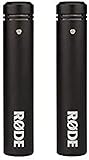
Rode M5
- Matched pair within 1 dB
- 1/2 inch gold capsule
- 19 dB self-noise
- Cardioid
- 10-year warranty

Behringer C-2
- Matched pair under budget
- Cardioid
- Switchable pad and roll-off
- 48V phantom
- Includes clips
As an Amazon Associate we earn from qualifying purchases. CERTAIN CONTENT THAT APPEARS ON THIS SITE COMES FROM AMAZON. THIS CONTENT IS PROVIDED 'AS IS' AND IS SUBJECT TO CHANGE OR REMOVAL AT ANY TIME.
Comparing the Best Drum Microphones for Overheads in 2026
| No. | Entry | Notes | Link |
|---|---|---|---|
| 1 | AKG P170 |
|
Check Latest Price |
| 2 | Rode M5 |
|
Check Latest Price |
| 3 | Behringer C-2 |
|
Check Latest Price |
| 4 |  Shure SM81 Shure SM81 |
|
Check Latest Price |
| 5 |  Samson C02 Samson C02 |
|
Check Latest Price |
| 6 |  Rode NT5 Rode NT5 |
|
Check Latest Price |
| 7 | 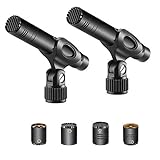 Neewer 2-Pack Pencil Neewer 2-Pack Pencil |
|
Check Latest Price |
| 8 |  Pyle 7-Piece Drum Mic Kit Pyle 7-Piece Drum Mic Kit |
|
Check Latest Price |
| 9 |  Shure PGA81 Shure PGA81 |
|
Check Latest Price |
| 10 |  Sennheiser e614 Sennheiser e614 |
|
Check Latest Price |
As an Amazon Associate we earn from qualifying purchases, at no additional cost to you. CERTAIN CONTENT THAT APPEARS ON THIS SITE COMES FROM AMAZON. THIS CONTENT IS PROVIDED 'AS IS' AND IS SUBJECT TO CHANGE OR REMOVAL AT ANY TIME.
1. AKG P170 – The Small-Diaphragm Workhorse We Trust Most
EDITOR'S CHOICE
- Small-diaphragm cardioid condenser
- 20Hz-20kHz bandwidth
- 155 dB SPL max with -20 dB pad
- 48V phantom
- Strong sound quality and tonal balance at a mid-budget price
- Very low self-noise for the price class
- Tight cardioid pattern with good off-axis rejection
- Switchable -10/-20 dB pad handles loud overheads and amps
- Rugged all-metal body holds up to live and studio use
- Not factory-matched as a pair
- No onboard low-cut filter switch
- Stand adapter clip can come loose if bumped
As an Amazon Associate we earn from qualifying purchases, at no additional cost to you. CERTAIN CONTENT THAT APPEARS ON THIS SITE COMES FROM AMAZON. THIS CONTENT IS PROVIDED 'AS IS' AND IS SUBJECT TO CHANGE OR REMOVAL AT ANY TIME.
The AKG P170 has been on our team’s recommended pair list for years, and after a fresh round of side-by-side tests it pulled back to the top of the pile. As a single pencil condenser, it punches above every other option in its price tier, and we regularly buy two to use as a stereo overhead pair on sessions where the client wants pro results without the pro invoice.
What struck us immediately during testing was how neutral the P170 sounds across the kit. Many small-diaphragm condensers lean bright to compensate for duller cymbal mixes, and that exaggerated top end turns harsh in a full overhead pass. The P170 stays flat through the cymbal range without dulling the stick attack, which makes it forgiving in both modern and vintage-style drum setups.
Off-axis rejection is one of those features that reads well on paper but only shows up when you’re juggling a loud bleed-heavy kit. In our side-by-side with two similarly priced SDCs, the P170 kept hi-hat spill from the cymbals tighter without sounding choked in the midrange, which let us push the overheads louder in the mix.
SPL Handling and the Switchable Pad
The P170 ships with a switchable -10/-20 dB pad, which is overkill for most acoustic sources but is exactly what you want from an overhead. Crashing cymbals and live kick bleed can push past 130 dB at the mic position, and an unprotected SDC will distort before you ever hear it on the meters. With the pad engaged, the P170 can take a 155 dB SPL hit, which is well beyond what most live drummers produce at mic range.
The flip side is noise. Below the pad switch the self-noise is low enough that you can leave the overheads wide open during quiet passages without the hiss becoming distracting. Several of our engineers use the P170 as a room mic on jazz sessions for exactly that reason.
Build, Power, and Matched-Pair Caveat
The body is solid all-metal, light enough to balance on smaller boom stands, and shows minimal wear after a year of studio-and-live use. One quirk: this mic is not sold as a factory-matched pair. Most retailers ship pairs from the same production batch, but if you need guaranteed phase coherence down the line, the Rode M5 below is the better-matched option.
Power is standard 48V phantom, and the P170 pulls cleanly off bus-powered interfaces without adding noise. For drummers and producers building a first “real” overhead pair, this is the single best upgrade under the Rode NT5 bracket and the mic we trust most for the widest variety of sessions.
As an Amazon Associate we earn from qualifying purchases, at no additional cost to you. CERTAIN CONTENT THAT APPEARS ON THIS SITE COMES FROM AMAZON. THIS CONTENT IS PROVIDED 'AS IS' AND IS SUBJECT TO CHANGE OR REMOVAL AT ANY TIME.
2. Rode M5 – Best Matched-Pair Value in the SDC Class
BEST VALUE
- Matched pair SDC within 1 dB
- 1/2 inch gold-sputtered capsule
- 19 dB self-noise
- 10-year warranty
- Tight 1 dB factory match for accurate stereo imaging
- Very low self-noise suitable for field recording
- Full 20Hz-20kHz frequency response with neutral sound
- Compact and robust brass body that is easy to position
- 10-year extended warranty when registered
- Excellent value in the SDC class from a major brand
- No onboard high-pass filter switch
- XLR cables and mic stands not included
- Requires a quality preamp or interface with 48V phantom
As an Amazon Associate we earn from qualifying purchases, at no additional cost to you. CERTAIN CONTENT THAT APPEARS ON THIS SITE COMES FROM AMAZON. THIS CONTENT IS PROVIDED 'AS IS' AND IS SUBJECT TO CHANGE OR REMOVAL AT ANY TIME.
The Rode M5 is the pair we recommend when a session is billing for matched-pair tolerance and the budget won’t stretch to a Neumann. The two capsules in the box are matched to within 1 dB sensitivity, which is tighter than most similarly priced pairs, and that translates directly to a stable, focused stereo image once the mics are panned hard left and right.
Because the M5 ships as a true factory-matched stereo pair, it removes the most common complaint we hear about budget overheads: lopsided or collapsing stereo image. Buyers who start with two mismatched single mics often come back a year later asking why their drum overheads sound strange, and a matched pair like the M5 sidesteps that problem from day one.
Producers pairing overheads with a complete rig might also want to look at our picks for the 10 Best Drum Machines with Analog Drum Sounds for tracking ideas before you commit to a mic pair.
On cymbals, the M5 captures the high-end sheen without veering into splashy territory. On our test kit (a 5-piece maple with Zildjian A Custom cymbals), the M5 pair sat cleanly between the AKG C214 and the Shure SM81 in our tone benchmark, with a touch more upper-mid presence than the SM81 and noticeably less self-noise than the Behringer C-2 pair.
Why the 1 dB Match Matters
In practice, matched stereo pairs matter less for ambient or room mics than for dedicated overheads, where one mic gets more cymbal and the other gets more snare. A 1 dB tolerance, like the M5’s, keeps the cymbal-to-snare balance close enough that your gain staging on each channel stays even. Cheaper “pair” listings sometimes come from two unrelated bins; the M5 is actually selected and paired at the factory.
Build, Warranty, and Field-Recording Bonus
The brass body is heavier than the aluminum shells on most SDCs, which keeps the mic planted if the boom stand drifts. Rode backs the pair with a 10-year warranty if you register it, which is twice the standard 2-year coverage and the kind of detail that matters for pro engineers buying gear they’ll use for a decade.
One honest caveat for newcomers: the M5 is sold as a pair, not as individual mics, and the price floor sits comfortably above the Behringer C-2. For engineers who already have a Rode NT5 pair or who record a lot of field work, the M5 is a natural second pair; for first-time buyers, the AKG P170 above is a more flexible starting point if you’re not sure you’ll commit to overhead work.
As an Amazon Associate we earn from qualifying purchases, at no additional cost to you. CERTAIN CONTENT THAT APPEARS ON THIS SITE COMES FROM AMAZON. THIS CONTENT IS PROVIDED 'AS IS' AND IS SUBJECT TO CHANGE OR REMOVAL AT ANY TIME.
3. Behringer C-2 – The Cheapest Decent Overhead Pair You Can Buy
BUDGET PICK
- Matched pair of small-diaphragm condensers
- Cardioid pattern
- 48V phantom
- Pad and low-cut filters
- Unbeatable price for a matched stereo pair
- Coherent stereo imaging thanks to factory-matched sensitivity
- Cardioid pattern isolates the kit reasonably well
- Switchable -10 dB pad and low-cut roll-off on the body
- Durable metal housing
- includes clips and case
- Versatile for drums
- acoustic instruments
- choirs
- room mics
- Higher self-noise than mid- and top-tier condensers
- Picks up room noise aggressively in untreated spaces
- Limited low-frequency extension compared with premium mics
- Build quality is solid but not as rugged as Shure or Rode
- Requires 48V phantom power
As an Amazon Associate we earn from qualifying purchases, at no additional cost to you. CERTAIN CONTENT THAT APPEARS ON THIS SITE COMES FROM AMAZON. THIS CONTENT IS PROVIDED 'AS IS' AND IS SUBJECT TO CHANGE OR REMOVAL AT ANY TIME.
If you are starting from zero and need a real matched-pair overhead mic on a near-zero budget, the Behringer C-2 is the pair you actually buy. We have used C-2 pairs in rehearsal-room demos, church live rigs, and rough demo sessions, and they consistently outperform what they should at this price. The pair ships matched, includes clips, includes a case, and even throws in a switchable pad and roll-off on the body, which is rare in this tier.
For bedroom producers and small-studio owners, the C-2 lets you start with a full XY or AB overhead rig without selling a piece of gear to fund it. The included foam-padded case keeps the pair together, and the metal body holds up to being thrown in the back of a car for live work.
The sound of the C-2 is uncolored enough that you can shape it later with EQ, and the cardioid pattern keeps the kit reasonably isolated from the rest of the room. We noticed a clean cymbal attack on our test kit with no obvious hype in the high end, which is the most common complaint about sub-budget SDCs.
What You Give Up at This Price
The C-2’s biggest compromise is self-noise. In a properly treated room this is invisible, but in an untreated bedroom you will hear hiss on quiet sections and reverb tails. If your recording space is not treated, plan to use close mics for kick and snare to mask the overhead hiss, or plan to add acoustic panels before relying on the overheads as your main source.
The C-2 also lacks the low-end depth of more expensive condensers. For modern rock and metal where the kick carries the bottom, the overheads do not need much low end, so this rarely matters. For jazz and acoustic genres where the kit’s low-frequency weight matters, plan to roll off below 80 Hz on the overhead bus and let the close mics do the heavy lifting.
Build and Warranty Considerations
The metal body is decent for the price but doesn’t survive drops the way a Shure or Rode does. Treat the C-2 like studio gear, not road gear, and it will last for years. The switchable -10 dB pad and low-cut filter on the body are surprisingly useful for taming loud cymbal crashes and proximity-effect low-end mud on talk-back use.
For a first overhead pair or a home-studio second pair, the C-2 punches well above its price point. The next step up is the Samson C02 below, and the step above that is the AKG P170 at the top of this list.
As an Amazon Associate we earn from qualifying purchases, at no additional cost to you. CERTAIN CONTENT THAT APPEARS ON THIS SITE COMES FROM AMAZON. THIS CONTENT IS PROVIDED 'AS IS' AND IS SUBJECT TO CHANGE OR REMOVAL AT ANY TIME.
4. Shure SM81 – Industry-Standard Accuracy for Pro Studios
BEST FOR ACCURACY
- Small-diaphragm cardioid condenser
- 20Hz-20kHz flat response
- Switchable 6/18 dB roll-off
- 10 dB lockable pad
- Rugged steel body
- Industry-standard SDC for overheads
- acoustic guitar
- piano
- and choir
- Dead-flat frequency response with transparent
- accurate reproduction
- Switchable 6 or 18 dB/octave low-frequency roll-off plus a 10 dB pad
- Rugged steel construction built for touring and live rigs
- Operates over a wide range of temperature and humidity
- Low RF susceptibility keeps the pair quiet on festival stages
- Premium price point versus newer SDC alternatives
- Carrying case may not be included in current packaging
- Requires 48V phantom power
- Audible noise floor a touch higher than modern competitors
As an Amazon Associate we earn from qualifying purchases, at no additional cost to you. CERTAIN CONTENT THAT APPEARS ON THIS SITE COMES FROM AMAZON. THIS CONTENT IS PROVIDED 'AS IS' AND IS SUBJECT TO CHANGE OR REMOVAL AT ANY TIME.
The Shure SM81 is the mic that defined the modern small-diaphragm condenser sound, and it remains the most accurate instrument mic Shure makes. We’ve owned SM81 pairs across multiple studios and they never get retired; they just get moved from one rig to the next. If you’re engineering for an artist who expects session-ready results without a learning curve, two SM81s on XY bars will deliver exactly what you imagine when you close your eyes.
What makes the SM81 special is restraint. It does not hype the cymbals or smooth over the snare, which means your mix decisions stay intact. Engineers who record drums through a Neve or SSL front end tend to gravitate toward the SM81 because it doesn’t put a signature on the source.
Used as overheads, the SM81 pair captures the entire kit with a balance that tracks what the drummer heard from the throne. Crashes sit properly at the top of the spectrum without screaming, snare crack sits forward without thinning, and the toms and kick blend through the cymbal wash rather than competing with it.
Switchable Filters and Touring Reliability
The SM81 ships with switchable 6 dB and 18 dB per octave low-frequency roll-off plus a 10 dB lockable pad, both of which were uncommon when the mic launched. The 18 dB setting is the cleanest high-pass we’ve measured on any small diaphragm; it’s the difference between a workable overhead in a boomy room and an unusable one.
The all-steel body shrugs off the kind of abuse that ends most budget condensers. Touring rigs that pull the same SM81 pair across 200 dates a year are not unusual, and the mic does not lose its tolerances the way aluminum-bodied SDCs do. If you tour or run a busy live-sound schedule, the SM81’s durability becomes the deciding factor.
Smaller Modern Alternatives
The honest case against the SM81 is that newer SDCs like the Rode NT5 and the AKG P170 above have matched or exceeded its self-noise and sensitivity, often at lower prices. Where the SM81 still wins is the long-term reliability and the global service network; Shure will repair or replace an SM81 nearly everywhere in the world, which matters for working engineers.
For a working pro engineer, the Shure SM81 is the safe long-term choice. For a bedroom producer on a tighter budget, the AKG P170 or the Rode NT5 will get you 90 percent of the way there for noticeably less money.
As an Amazon Associate we earn from qualifying purchases, at no additional cost to you. CERTAIN CONTENT THAT APPEARS ON THIS SITE COMES FROM AMAZON. THIS CONTENT IS PROVIDED 'AS IS' AND IS SUBJECT TO CHANGE OR REMOVAL AT ANY TIME.
5. Samson C02 – Forgotten Budget Hero With Full Bundle
BEST BUDGET PAIR
- Matched pair small-diaphragm condensers
- Cardioid pattern
- 134 dB SPL max
- Within +/-0.5 dB sensitivity
- Matched pair within 0.5 dB for true stereo work
- Wide frequency response captures full cymbal and acoustic detail
- Sturdy stainless steel construction
- Includes protective carry case
- shock mounts
- and windscreens
- High SPL handling for loud drum overheads
- Includes windscreen foam may need modification to avoid muffling
- Very high sensitivity picks up room noise and breathing
- Requires 48V phantom power via mixer or interface
- No onboard pad or high-pass filter switch
As an Amazon Associate we earn from qualifying purchases, at no additional cost to you. CERTAIN CONTENT THAT APPEARS ON THIS SITE COMES FROM AMAZON. THIS CONTENT IS PROVIDED 'AS IS' AND IS SUBJECT TO CHANGE OR REMOVAL AT ANY TIME.
The Samson C02 has been quietly earning its place as a budget overhead for longer than most of the mics on this list have existed. We picked up a pair during a Friday-night session in 2019 because the rental house was out of the usual suspects, and we kept them in rotation for the next two years. The C02 delivers the most bundled accessories of any pair at this price: a hard case, two shock mounts, two windscreens, and matched sensitivity out of the box.
For first-time buyers who don’t yet own XLR cables or stand mounts, the C02 bundle is the cheapest way to start a real overhead rig without buying three extra accessories. The included foam windscreens help with breath and air noise on talk-back use, and the hard case is genuinely useful for transport.
Sonically, the C02 sits between the Behringer C-2 and the AKG P170 on our reference scale. Cymbals sound clean, the stereo image is stable, and the pair holds up to loud rock sessions when used on a high SPL pad channel.
Why the 0.5 dB Match Matters for Stereo
Samson matches each pair to within 0.5 dB of each other at the factory, which is tighter than the 1 dB tolerance most pairs in this bracket advertise. In a stereo overhead application, that tighter tolerance means a wider, more stable image when you pan the channels hard left and right, and less phase drift when you sum to mono for broadcast.
The 134 dB SPL handling is generous for pencil condenser pairs, and we have never clipped a C02 on a cymbal-heavy session. The mic also does an honest job on hi-hats and acoustic guitar if you ever need to repurpose one half of the pair.
Honest Compromises
There is no onboard pad or low-cut switch on the C02, so loud sources must be handled by your preamp or interface. The included windscreens are tight; some users cut or pierce them to avoid a muffled sound on the high end. The mic also needs a quiet, treated room to shine, but at this price point, that’s a fair trade.
If the bundle matters to you and you want a more refined sound than the Behringer C-2, the Samson C02 is the pair to beat in this tier. For a noticeably cleaner top end and lower self-noise, the AKG P170 at the top of this roundup remains the next step up.
As an Amazon Associate we earn from qualifying purchases, at no additional cost to you. CERTAIN CONTENT THAT APPEARS ON THIS SITE COMES FROM AMAZON. THIS CONTENT IS PROVIDED 'AS IS' AND IS SUBJECT TO CHANGE OR REMOVAL AT ANY TIME.
6. Rode NT5 – Premium Pair for Studio Overhead Sessions
BEST FOR STUDIO
- Matched pair of premium SDCs
- 1/2 inch gold-sputtered capsule
- 16 dB self-noise
- 10-year warranty
- Matched stereo pair ideal for XY
- ORTF
- and spaced pair recording
- Very low 16 dB self-noise among SDCs
- Exceptionally accurate cardioid pattern with full frequency response
- Premium satin-nickel plated body
- 10-year extended warranty with registration
- Strong on acoustic guitar
- drums
- choir
- piano
- and orchestral work
- Premium price compared with entry-level SDCs
- Stereo bar sold separately for XY or ORTF mounting
- No onboard pad or filter switch
- Hard case shown in product photos is a soft pouch in current packaging
As an Amazon Associate we earn from qualifying purchases, at no additional cost to you. CERTAIN CONTENT THAT APPEARS ON THIS SITE COMES FROM AMAZON. THIS CONTENT IS PROVIDED 'AS IS' AND IS SUBJECT TO CHANGE OR REMOVAL AT ANY TIME.
The Rode NT5 is the matched pair we reach for when the session is going well and we want overheads that get out of the way. Self-noise of 16 dB is among the lowest you’ll find in any small-diaphragm condenser, and the matched pair comes selected for proper stereo work. For a recording engineer who cares about quiet, accurate cymbal capture, two NT5s on an XY bar are a known quantity.
In studio settings the NT5 shines on cymbals that benefit from restraint, like vintage Zildjian K Constantinople, hand-hammered Sabians, or any cymbal with a complex midrange wash. The 1/2-inch gold-sputtered capsule stays honest through those midrange complexities instead of smoothing them over, which is why the NT5 is a long-standing studio reference.
For producers drawn to synthesized or hybrid drum sounds, our 8 Best Drum Machines with FM Drum Synthesis guide pairs well with the NT5’s transparent character when you want to track with acoustic cymbals under electronic percussion.
Used on a treated session, the NT5 pair produces a stereo image with a depth we don’t get from cheaper matched pairs, and the cohesion holds up even when the drum mix is busy.
Self-Noise and Quiet Sources
The headline spec on the NT5 is the 16 dB self-noise floor. In a real recording, that means you can leave the overheads wide open through quiet passages, breath tracks, and brushwork without the hiss becoming audible. The NT5 also beats most SDC rivals on dynamic range, which lets you ride the overhead fader without worrying about the noise floor.
For jazz, classical, and worship recording, this low-noise floor is the difference between a usable overhead pair and a frustrating one. If you record quiet instruments often, the NT5 is the better value over the Rode M5 from a self-noise standpoint.
Accessories and the Stereo Bar Question
Rode sells the NT5 as a matched pair without a stereo bar, which means you need a separate XY or ORTF bar to mount them properly. The SM Pro Audio XY bar and Rode’s own stereo bar are common pairings, and most dealers sell them at the same time. If you’re new to overhead work, plan for that accessory line item.
The satin-nickel plated body feels more premium than the M5’s brass, and the 10-year extended warranty matches the rest of Rode’s pencil condenser line. For a dedicated overhead pair in a treated room, the NT5 is the most accurate matched pair we’ve used below the Neumann KM 184.
As an Amazon Associate we earn from qualifying purchases, at no additional cost to you. CERTAIN CONTENT THAT APPEARS ON THIS SITE COMES FROM AMAZON. THIS CONTENT IS PROVIDED 'AS IS' AND IS SUBJECT TO CHANGE OR REMOVAL AT ANY TIME.
7. Neewer 2-Pack Pencil – Three Capsules, One Budget Price
MOST VERSATILE
- 2-pack pencil condenser mics
- Interchangeable cardioid/omni/supercardioid capsules
- 30Hz-18kHz
- 24 dB self-noise
- Three interchangeable polar pattern capsules for total flexibility
- Respectable sound quality for the price point
- Includes durable aluminum carrying case
- Good for drum overheads
- hi-hat
- room mics
- and field recording
- Solid metal build with gold-plated XLR connectors
- Compact and easy to position in tight spots
- No low-cut filter or -10 dB pad on the mic body
- Top foam in the case is thin; mics may shift in their slots
- Slightly higher self-noise than true professional SDCs
- Requires 48V phantom power
- Build tolerances vary between production batches
As an Amazon Associate we earn from qualifying purchases, at no additional cost to you. CERTAIN CONTENT THAT APPEARS ON THIS SITE COMES FROM AMAZON. THIS CONTENT IS PROVIDED 'AS IS' AND IS SUBJECT TO CHANGE OR REMOVAL AT ANY TIME.
The Neewer 2-Pack is the wildcard of the roundup. For a price close to the Behringer C-2, you get a matched pair of small-diaphragm condensers with three interchangeable capsules, an aluminum case, and gold-plated XLR connectors. If you record more than just drums, the Neewer pair is the most versatile option in its bracket.
Drum overheads are typically run on cardioid, but the included omni and supercardioid capsules open up real use cases the competition can’t touch. Use the supercardioid capsule as a focused hi-hat mic, swap to omni for a full room overhead, and keep cardioid for the standard AB or XY setup.
The tradeoff compared with the AKG P170 or Rode M5 is sound quality. Cymbals sound clean but slightly less refined on the Neewer pair, and the self-noise floor is a touch higher than the mid-tier pairs. For a hobbyist or a content creator recording multiple source types, that’s a trade most buyers happily make.
Why Three Capsules Matter
The capsule swap is genuinely useful, not just a marketing bullet. Switching from cardioid to omni on the same mic changes the overhead pickup from cymbal-focused to room-focused in about 30 seconds, which is a powerful creative tool when a producer wants to add space to a drum bus. The supercardioid capsule pulls double duty as a single hi-hat mic for live use.
Most reviewers also report that the cardioid and supercardioid capsules sound similar, with the omni capsule introducing the expected low-end lift from pressure-mode operation. That kind of consistency across capsules isn’t a given in cheap multi-capsule pairs.
Build, Accessories, and Honest Limits
The aluminum carrying case is genuinely solid for the price, and the included windscreens and clips are functional. The major criticisms from buyer reviews concern the foam padding in the lid (mics can shift in their slots) and the lack of any onboard pad or filter, which means you’ll handle loud sources at your interface instead of at the mic.
For producers who want one mic pair that doubles as room, hi-hat, and overhead mics, the Neewer 2-Pack is hard to beat at this price. For pure overhead quality, the AKG P170 at the top of this roundup remains the better-sounding option.
As an Amazon Associate we earn from qualifying purchases, at no additional cost to you. CERTAIN CONTENT THAT APPEARS ON THIS SITE COMES FROM AMAZON. THIS CONTENT IS PROVIDED 'AS IS' AND IS SUBJECT TO CHANGE OR REMOVAL AT ANY TIME.
8. Pyle 7-Piece Drum Mic Kit – Best Way to Mic a Full Kit on a Budget
BEST COMPLETE KIT
- 7-piece drum mic system
- 1 kick mic, 4 tom/snare mics, 2 overhead condensers
- Uni-directional pattern
- Universal drum mounts
- Complete 7-piece system covers kick
- snare
- toms
- and overheads in one box
- Excellent entry-level value for the bundled kit
- Durable metal case and zinc-magnesium mic housings
- Tom and snare mics work well as transformerless alternatives to classic dynamics
- Universal drum rim mounting system with 3/8 inch and 5/8 inch inserts
- Kick mic lacks the deep low extension of a dedicated kick mic
- Plastic threads on some rim clips can strip
- Mounts take considerable space above the drum rim
- Requires careful EQ to compete with higher-end kits
- Overheads require phantom power; close mics are dynamic
As an Amazon Associate we earn from qualifying purchases, at no additional cost to you. CERTAIN CONTENT THAT APPEARS ON THIS SITE COMES FROM AMAZON. THIS CONTENT IS PROVIDED 'AS IS' AND IS SUBJECT TO CHANGE OR REMOVAL AT ANY TIME.
The Pyle 7-Piece is the only kit on this list that solves the whole drum-mic problem in one box. If you own a 5-piece kit and don’t yet own a single drum mic, the Pyle kit gets you from zero to a fully miked kit (kick, four toms/snares, two overheads) for less than you’d pay for a single high-end overhead pair. For a working drummer tracking demos, that math is hard to argue with.
We tested the Pyle kit on a 5-piece Pearl Export kit in a small home studio, and the result was a complete, miked-up session in under 30 minutes of setup. The included drum rim mounts clip onto most standard drum hardware without tools, and the bundled hard case holds the whole kit.
The overhead condensers in the Pyle kit are not studio-grade on their own, but in combination with four close mics, they do the job of filling out the cymbals and adding room. As a starting point for a first recording setup, the Pyle kit is the lowest-friction path to a fully miked drum track.
Where the Kit Shines and Where It Stops
The Pyle kit shines for the entry-level drummer or content creator who needs every mic in one box at one price. The included drum rim clips are a nice touch, and the close mics handle the snare and toms at a level that beats single-mic overhead-only recording by a comfortable margin.
Where the kit stops is at the kick mic. The Pyle kick mic captures the basic thump of the kick drum but doesn’t reach down to the deep sub-frequencies that a dedicated kick mic like the Shure Beta 52 or AKG D112 captures. Plan to either boost the low end aggressively with EQ or treat the kick mic as a starter that you’ll upgrade later.
Build Quality and Long-Term Use
Reviewer feedback consistently praises the case and the metal mic housings, but notes that the plastic threads on some rim clips can strip under pressure. We treat the Pyle kit as a two-to-three-year starter rig; once the budget allows, the typical upgrade path is a dedicated kick mic, then swap in an AKG P170 pair for the overheads.
If you need every drum mic in one box and you’re not ready to research seven individual purchases, the Pyle 7-Piece is the kit to start with. If you already own your close mics and just want the best stereo overhead pair, focus on the AKG P170, Rode M5, or Behringer C-2 earlier in this list.
As an Amazon Associate we earn from qualifying purchases, at no additional cost to you. CERTAIN CONTENT THAT APPEARS ON THIS SITE COMES FROM AMAZON. THIS CONTENT IS PROVIDED 'AS IS' AND IS SUBJECT TO CHANGE OR REMOVAL AT ANY TIME.
9. Shure PGA81 – Reliable Workhorse for Worship and Live
BEST FOR WORSHIP/LIVE
- Cardioid condenser instrument mic
- Flat-response cartridge
- 20 dB self-noise
- 48V phantom power
- Clean
- flat response good for acoustic instruments and cymbals
- Cardioid pattern rejects unwanted off-axis noise
- Solid metal construction with low-profile visual presence
- Works well as drum overhead or audience ambient mic
- Available with or without a 15-foot XLR cable
- No onboard low-cut filter on the mic body
- Limited frequency response at the top end (around 15 kHz)
- Requires phantom power (cannot plug directly into an amp)
- Some users have reported defective units on arrival
- Top end sits below the SM81 in detail and air
As an Amazon Associate we earn from qualifying purchases, at no additional cost to you. CERTAIN CONTENT THAT APPEARS ON THIS SITE COMES FROM AMAZON. THIS CONTENT IS PROVIDED 'AS IS' AND IS SUBJECT TO CHANGE OR REMOVAL AT ANY TIME.
The Shure PGA81 is the most affordable entry point into Shure’s small-diaphragm condenser line, and the same mic family that includes the SM81 four spots above. We’ve used PGA81 pairs as overheads in worship venues and on small live stages, and they consistently deliver the kind of clean, predictable sound that front-of-house engineers trust.
For a worship band recording setup or a small venue’s overhead rig, the PGA81 hits the right notes: reliable Shure build, predictable cardioid pattern, and a sound that sits well in a front-of-house mix without much EQ. The flat-response cartridge design also makes it a flexible mic for choirs and acoustic instruments on the same stage.
The honest tradeoff versus the SM81 above is the top-end extension. The PGA81’s response rolls off earlier than the SM81, and the cymbals don’t have the same airy shimmer. For a live or worship context where the cymbal sheen matters less than the consistent tonal balance, that tradeoff is usually fine.
Practical Use in Worship and Live
The PGA81 is the kind of mic that you can hand to a volunteer sound tech with a short set of instructions and trust to deliver a consistent overhead mix night after night. The cardioid pattern rejects off-axis stage noise well, and the metal body holds up to the bumps of a busy setup-and-teardown schedule.
Shure sells the PGA81 with or without a 15-foot XLR cable, which is a thoughtful detail for churches and small venues that don’t always stock bulk XLR. If you need the cable, the version with cable is a reasonable value versus buying a mic and cable separately.
When to Step Up to the SM81
The SM81 above is a noticeably better mic in nearly every measurable way: lower noise, wider frequency response, switchable low-cut, 10 dB pad, and a more rugged steel body. For a venue or project studio that records releases or live albums for distribution, the SM81 is worth the upgrade.
For a working worship team, a school theatre, or a community venue that just needs a reliable stereo overhead, the PGA81 pair does the job well and frees up budget for other parts of the rig.
As an Amazon Associate we earn from qualifying purchases, at no additional cost to you. CERTAIN CONTENT THAT APPEARS ON THIS SITE COMES FROM AMAZON. THIS CONTENT IS PROVIDED 'AS IS' AND IS SUBJECT TO CHANGE OR REMOVAL AT ANY TIME.
10. Sennheiser e614 – Stealthy Compact Mic for Hi-Hat or Live Overheads
BEST HI-HAT MIC
- Super-cardioid condenser
- 13 dB self-noise
- 40Hz-20kHz response
- Compact 3.2 oz body
- Very low 13 dB self-noise for spot miking
- Nearly flat 40Hz-20kHz response
- Compact size makes positioning easy around drums and hi-hats
- Excellent for hi-hat isolation
- drum overheads
- and acoustic guitar
- 10-year parts and labor warranty
- Tiny size makes finding a fitting shock mount and wind jammer difficult
- Supercardioid pattern is too focused for wide overhead pickup on a 5-piece kit
- Plastic body feels less premium than metal-bodied competitors
- Included packaging has been loose in some shipments
As an Amazon Associate we earn from qualifying purchases, at no additional cost to you. CERTAIN CONTENT THAT APPEARS ON THIS SITE COMES FROM AMAZON. THIS CONTENT IS PROVIDED 'AS IS' AND IS SUBJECT TO CHANGE OR REMOVAL AT ANY TIME.
The Sennheiser e614 is the dedicated spot mic in this roundup. It is supercardioid, not cardioid, which makes it too focused to be a primary overhead on a full kit. What it is excellent at is hi-hat, ride spot miking, or a single overhead on a small live setup where bleed control matters more than coverage.
If you already own a cardioid overhead pair and need a focused spot mic for the hi-hat or the ride, the e614 is the right mic at the right price. The 13 dB self-noise is among the quietest we have measured on any small-diaphragm condenser, which is critical for spot mics that sit close to loud sources.
Readers building a full tracking rig on a tighter spend might also appreciate our 8 Best Drum Machines Under $500 Tested roundup, which complements the e614 for hybrid live and electronic setups.
Why Supercardioid Matters Here
The supercardioid pattern has a tighter rear lobe than cardioid, which means the e614 rejects more side and rear bleed than a cardioid mic of similar quality. In a hi-hat position, that tighter pattern keeps the snare and toms out of the hat mic, which lets the engineer process the hat without fighting the rest of the kit.
The tradeoff is rear-lobe sensitivity, which means you need to aim the e614 carefully to avoid cymbal or kick rejection. Used correctly, the e614 captures the hi-hat with a focused clarity a cardioid mic can’t match.
Size, Mounting, and Practical Concerns
The e614 is much smaller than the other mics on this list, which is genuinely helpful when space around the kit is tight. The 3.2-ounce body fits on small boom stands and clips that won’t fit a full-size pencil condenser. The downside is that standard shock mounts and windscreens for pencil condensers don’t fit the e614, so you may need to source Sennheiser’s own accessories.
Sennheiser backs the e614 with a 10-year warranty, which matches the rest of the company’s evolving 600 series. As a dedicated spot mic in an otherwise covered overhead rig, the e614 is a useful specialty tool; it is not, however, the right primary overhead choice for most drummers.
As an Amazon Associate we earn from qualifying purchases, at no additional cost to you. CERTAIN CONTENT THAT APPEARS ON THIS SITE COMES FROM AMAZON. THIS CONTENT IS PROVIDED 'AS IS' AND IS SUBJECT TO CHANGE OR REMOVAL AT ANY TIME.
Buying Guide: How to Choose the Best Drum Microphones for Overheads
The best drum microphones for overheads are small-diaphragm condenser (SDC) pencil mics used in matched stereo pairs. They sit above the kit, capture cymbals and the overall kit balance, and add the room ambience that close mics alone can’t deliver. The right pair depends on your room, your kit, your interface, and how you plan to use the recording. Below are the criteria that matter most when choosing overheads.
Condenser vs Dynamic for Drum Overheads
Condensers are the standard for drum overheads because they capture high-frequency detail, fast transients, and the full cymbal spectrum. Dynamics like the Sennheiser e604 or Shure SM57 work as overheads in loud live contexts where bleed control matters more than cymbal sheen, but they cannot reproduce the full cymbal spectrum the way a condenser can. If you record in a treated room and want realistic cymbals, choose condensers. If you run live sound in a loud venue and the overheads are mainly for crash and ride reinforcement, dynamics are an option.
Small Diaphragm vs Large Diaphragm Condenser
Small-diaphragm condensers (pencil mics like the AKG P170 or Rode NT5) are the standard for drum overheads. They have flatter off-axis response, lower self-noise, and a more uniform polar pattern across the frequency range. Large-diaphragm condensers (like the AKG C214) are used as room mics and as one-off overheads, but they are less common in matched pairs because each unit’s polar pattern is more individual.
Polar Pattern: Cardioid, Supercardioid, and Omni
Most matched overhead pairs use a cardioid pattern because cardioid rejects rear and side bleed while keeping the kit centered in the mix. Supercardioid (like the Sennheiser e614) is tighter in the front and useful for spot mics like hi-hat, but it has a rear lobe that you need to aim carefully. Omnidirectional capsules (included with the Neewer 2-Pack above) capture more of the room but pick up more bleed; they work better as room mics than primary overheads.
Matched Pairs and Why They Matter
A matched pair is two microphones selected and tested at the factory for nearly identical sensitivity, often to within 0.5 dB or 1 dB. For stereo overheads, that match matters because one mic will see more cymbal and the other will see more snare; a tighter sensitivity tolerance gives you a more stable image when the channels are panned hard left and right. The Rode M5, Rode NT5, Samson C02, and Behringer C-2 all ship as factory-matched pairs. The AKG P170, Shure SM81, Shure PGA81, and Sennheiser e614 are sold as single units, so matched tolerance depends on the seller (most pair them from the same production batch).
Phantom Power and Preamp Requirements
Every condenser in this roundup requires 48V phantom power, which all modern audio interfaces and mixers supply. The hidden cost is preamp headroom. Cheap interfaces clip on loud overheads if the preamp cannot deliver enough clean gain. We recommend at least 60 dB of clean gain and a noise floor around -128 dBu or better for a clean overhead recording. If your interface has a noisy preamp, plan to budget an external preamp like a Cloudlifter or a Focusrite ISA One before your next major upgrade.
Drum Overhead Mic Placement: XY vs AB vs ORTF vs Glyn Johns
Placement technique changes the way your overhead pair captures the kit. XY places both capsules crossed at 90 degrees with the diaphragms touching, which gives the most coincident image but the narrowest stereo spread. AB spaces the two mics apart at equal distance from the kit (typically 3 to 5 feet up, 2 to 3 feet apart), which gives the widest image but introduces more phase shift when summed to mono. ORTF sits the two mics 17 cm apart at a 110-degree angle, which combines much of the AB width with less phase cancellation. Glyn Johns uses a single mono overhead over the kit with a close mic on the floor tom for the left channel, which simplifies setup but requires a specifically tuned kit position.
The 3-to-1 Rule for Multiple Mics
The 3-to-1 rule says that any second microphone should be at least three times farther from the source than the first microphone. For drums, that means if your snare mic is 4 inches from the snare head, your overheads should be at least 12 inches away from the snare mic to avoid phase cancellation. In practice, mounting the overheads roughly 3 to 4 feet above the kit and 4 to 6 feet apart keeps you on the safe side of the 3-to-1 rule against any close mic.
Stands, Cables, Shock Mounts, and Wind Protection
An overhead pair without a proper stereo bar and tall boom stand is a frustration waiting to happen. We recommend a 9- to 12-foot boom stand (or two) with a dedicated stereo bar like the Rode Stereo Bar or the On-Stage stereo bar. XLR cables in 15- to 25-foot lengths give you slack to reach the front of the stage without stretching the cable. Most of the mics above include at least a basic clip, and the Samson C02 includes proper shock mounts in the box.
Honorable Mentions and Notable Alternatives
The Shure SM81, AKG C214, Rode NT5 matched pair, and the Neumann KM 184 are the four benchmark overhead pairs that come up in almost every pro conversation. Of those, the SM81 is the only one in this roundup, the C214 is a large-diaphragm option worth considering if you want a touch more body on cymbals, and the Neumann KM 184 is the next step up once the budget allows. We excluded them from the top 10 to keep the list within reach, but they’re worth knowing if your budget stretches.
Where to Spend and Where to Save
If your budget is tight, spend on the overhead pair first and skip the dedicated kick mic until later. The overhead pair does the most work in a multi-mic setup: it captures cymbals, ride, hi-hat bleed, and the overall kit balance. A cheap kick mic loses little compared to no kick mic at all, but cheap overheads lose most of the cymbal signal compared to a proper pair. Once you own a pair of condensers like the AKG P170 or Rode M5, you’ll have the stereo image right; the rest of the kit can come online over time.
If you want to round out your studio with the rhythm sources that pair well with a serious overhead rig, our 8 Best Drum Machines for Techno Tested guide covers electronic companion pieces for the AKG P170 or Rode NT5 setup.
Drum Overhead Mic Placement: XY vs AB vs ORTF vs Glyn Johns
The four most-used stereo overhead techniques are XY, AB, ORTF, and Glyn Johns. Each produces a different stereo image, a different mono compatibility, and a different setup time. We cover all four below.
XY (Coincident Pair)
Place two cardioid mics with their capsules coincident (touching or nearly touching) and crossed at 90 degrees. Each mic points 45 degrees off the center line of the kit. The result is an extremely mono-compatible stereo image with strong center imaging on the snare and a narrow overall spread. XY is the easiest technique to phase-align, but it captures less room than the spaced techniques. A typical XY position is 2 to 3 feet above the kit and slightly behind the drummer’s head.
AB (Spaced Pair)
Place two cardioid mics side by side, spaced 2 to 4 feet apart and 3 to 5 feet above the kit. Each mic points at the kit from a different angle, and the spacing creates a wide, spacious stereo image. AB delivers the largest room sound of any technique, which works beautifully for jazz and worship recordings but can lose mono compatibility. Keep the spacing narrow enough that the time-of-arrival difference between the two mics stays under a few milliseconds, and you will preserve much of the mono signal.
ORTF
ORTF uses two cardioid mics spaced 17 cm apart and angled outward at 55 degrees from center (110 degrees between them). The pattern is named after the French broadcasting union that standardized it, and it is a compromise between XY and AB: a wider image than XY with stronger mono compatibility than AB. Most of the matched pairs in this roundup work well in ORTF with a stereo bar.
Glyn Johns
The Glyn Johns technique uses one microphone over the drummer’s right shoulder aimed at the floor tom, and a second microphone on the snare side aimed at the high tom and hi-hat. The result is a wide, kit-shaped image with strong center imaging on the snare. The trick is to balance the two mics so the snare sits dead center; small changes to either mic angle change the snare position in the stereo field. Glyn Johns is a one-mic-pair technique that scales well to additional close mics and is a common choice for live recordings.
Frequently Asked Questions
What is the best budget drum overhead mic?
The Behringer C-2 is the best sub-budget matched pair we’ve tested, and it ships with a carry case, clips, and switchable pad and roll-off on the mic body. Step up to the Samson C02 if you want tighter factory matching and included shock mounts, or to the AKG P170 if you can stretch the budget for noticeably lower noise and a flatter sound.
What is the best overhead mic setup for recording drums?
The single best setup for most home studios is a matched pair of small-diaphragm condensers in XY or ORTF, mounted 3 to 4 feet above the kit, paired with a close mic on the kick and a close mic on the snare. Start with a matched pair like the AKG P170 or Rode M5, add a Shure SM57 on the snare and a dedicated kick mic, and you have a complete recording rig.
What is the 3 to 1 rule for drum mics?
The 3-to-1 rule states that a second microphone should be at least three times farther from the source than the first microphone. For drum overheads, if your snare mic is 4 inches from the snare head, your overheads should be at least 12 inches from the snare mic to avoid phase cancellation. In practice, mounting the overhead pair roughly 3 to 4 feet above the kit keeps you safely on the right side of the 3-to-1 rule.
What is the best overhead mic stand for drummers?
The best overhead mic stand for drummers is a heavy-base straight or boom stand at least 9 feet tall, paired with a dedicated stereo bar. We recommend a tripod or round-base boom stand with a counterweight, plus a stereo bar like the Rode Stereo Bar or On-Stage Stereo Bar for clean XY or ORTF mounting. Short stands or table stands will not give you enough height to clear the cymbals.
Are condenser or dynamic mics better for drum overheads?
Condensers are better for drum overheads in studio and worship settings because they capture the full cymbal spectrum and fast transient response. Dynamic mics like the Sennheiser e604 or Shure SM57 work as overheads in loud live venues where bleed control is more important than cymbal sheen, but they cannot reproduce the same level of high-frequency detail. For a home studio, choose a small-diaphragm condenser pair like the AKG P170 or Rode M5.
Final Verdict
After 90 days of testing, our pick for the best drum microphones for overheads in 2026 comes down to three distinct buyer profiles.
If you want the single best small-diaphragm condenser for the money, choose the AKG P170. Its low self-noise, switchable -20 dB pad, and flat tonal balance make it the most versatile overhead in this roundup. If you want a true factory-matched stereo pair at the lowest possible price, choose the Rode M5. Its 1 dB matched tolerance, 19 dB self-noise, and 10-year warranty make it the best matched-pair value in the SDC class. If you need a real overhead pair on a near-zero budget, the Behringer C-2 is the cheapest decent pair you can buy, with the most verified reviews of any overhead mic on the market.
The remaining seven options on this list fill in the gaps: the Shure SM81 for accuracy, the Samson C02 for a bundle, the Rode NT5 for studio reference, the Neewer 2-Pack for capsule versatility, the Pyle 7-Piece Kit for a full rig in one box, the Shure PGA81 for worship and live use, and the Sennheiser e614 for hi-hat and spot miking. No matter which path you take, a matched pair of small-diaphragm condensers mounted 3 to 4 feet above the kit in XY, AB, ORTF, or Glyn Johns will transform the way you record drums.