
Choosing the best condenser microphones under 300 dollars feels simple until you start reading spec sheets, because a dozen brands all promise studio detail and warm lows. Our team spent weeks comparing capsules, polar patterns, self-noise figures and real-world room behavior across twelve models so you can skip the guesswork and match a microphone to the way you actually record.
What this budget buys you is genuinely good capture. Every mic on this list pulls vocal nuance, acoustic guitar string detail and piano transients that a basic USB headset mic flattens out. What it does not buy you is the low self-noise of a five-figure studio capsule, nor immunity to a noisy room.
That last point is where most budget condensers disappoint people, and it is worth saying plainly. A condenser is a sensitive instrument. It hears your fridge, your laptop fan and the traffic outside, and it hears your breathing and plosives, which is why a pop filter is not optional. The trick is matching the microphone to your room and to your source, which is how we ordered this list.
We also flagged the honest counterpoint that comes up constantly in recording forums: in an untreated bedroom, a mid-priced dynamic microphone is often the smarter buy. Condensers need a little help, and the buying guide at the end of this article explains what that help costs and how to get it cheaply.
Our methodology: we read owner reviews in volume, cross-checked every published specification against the manufacturer’s own data, and grouped picks by use case rather than by price alone. Ratings and review counts shown on each card are copied directly from the retail listing, so you can see how much real-world history each microphone has behind it.
IN THIS ENTRYTable of Contents
- 1Our Top 3 Picks for Condenser Microphones in This Budget
- 2Logitech Blue Yeti USB
- 3Audio-Technica AT2020
- 4Rode NT1 5th Gen
- 5Comparing All Best Condenser Microphones Under $300 in 2026
- 61. Logitech Blue Yeti USB – Best All-Round USB Condenser With Four Pickup Patterns
- 7Logitech Creators Blue Yeti USB Microphone for PC, Mac, Gaming, Recording, Streaming, Podcasting, Studio and Computer Condenser Mic with Blue VO!CE effects, 4 Pickup Patterns, Plug and Play – Blackout
- 8Four Pickup Patterns and What Each One Is For
- 9Onboard Controls, Monitoring and Build Quality
- 10Who Should Skip It
- 112. FIFINE K669B – Best Budget Condenser for a First Desk Setup
- 12FIFINE K669B USB Microphone, Condenser Recording Mic for Vocals, Meeting
- 13Cardioid Only and Why That Is Usually Fine
- 14Build, Box Contents and Desk Footprint
- 15Who Should Buy It
- 163. FIFINE T669 – Best Value Complete Studio Kit With Boom Arm
- 17FIFINE T669 Studio Condenser USB Microphone for Recording Podcasting
- 18Why the Included Accessories Still Matter
- 19Reliability and Long-Term Ownership
- 20Who Should Buy It
- 214. Audio-Technica AT2020 – Best XLR Starter Condenser in This Budget
- 22Audio-Technica AT2020 Cardioid Condenser Studio XLR Microphone, Ideal for Project/Home Studio Applications, Black
- 23What 20 dB of Self Noise Actually Means in Practice
- 24Phantom Power, Cables and the Real Cost of XLR
- 25Plosives, Sibilance and Handling Noise
- 26Who Should Buy It
- 275. Elgato Wave:3 MK.2 – Best for Streaming With Built-In Processing
- 28Elgato Wave:3 MK.2 USB Condenser Microphone, DSP Effects
- 29What the Super-Cardioid Pattern Actually Buys You
- 30Wave Link Software and Onboard Processing
- 31Who Should Buy It
- 326. Audio-Technica AT2035 – Most Versatile With Lower Self Noise
- 33Audio-Technica AT2035 Cardioid Condenser Microphone, Perfect for Studio, Podcasting & Streaming, XLR Output, Includes Custom Shock Mount
- 34High-Pass Filter and Pad: When Each Switch Earns Its Keep
- 35Build, Included Accessories and Mounting
- 36Who Should Buy It
- 377. Rode NT1 5th Gen – Best for Quiet Rooms and Very Low Self Noise
- 38RØDE NT1 5th Gen Studio Condenser Microphone, XLR + USB-C, Silver
- 39What 4 dB of Self Noise Changes in a Mix
- 40USB Mode, 32-Bit Float and What the Software Adds
- 41Who Should Buy It
- 428. MXL 990 – Best Budget Entry Into XLR Recording
- 43MXL 990 Condenser Microphone for Podcasting, Singing, Home Studio Recording, Gaming & Streaming | Detailed Sound | XLR | Large Diaphragm (Champagne)
- 44The Warm, Dark Character and Who It Flatters
- 45Reliability and the Weakest Component
- 46Who Should Buy It
- 479. TZ Stellar X2 – Best for a Neutral Tone That Sits in a Mix
- 48TZ Stellar X2 Large Diaphragm Cardioid Condenser XLR Microphone
- 49Low Noise Floor and Preamp Gain Savings
- 50The Sibilance Trade and the Build Debate
- 51Who Should Buy It
- 5210. AKG Lyra Ultra-HD USB C – Best for ASMR and On-Camera Use
- 53AKG Pro Audio Lyra Ultra-HD USB C Microphone for Recording, Streaming, Gaming, Podcasting, ASMR on PC and Mac, Condenser Mic for Laptop or Computer, Adjustable Stand, Plug and Play – Blue and Silver
- 54Capture Modes Versus a True Pattern Switch
- 55On-Camera Appearance and Multi-Device Support
- 56Who Should Buy It
- 5711. AKG P420 – Best Multi-Pattern Condenser in This Bracket
- 58AKG Pro Audio P420 Multi-Pattern Condenser Microphone with Shock Mount and Case. Great for ensemble recording, grand piano, woodwind, brass instruments, drums and percussion. Black and Gold.
- 59Three Patterns and Real Recording Applications
- 60Sensitivity Is Both the Strength and the Catch
- 61Who Should Buy It
- 6212. LEWITT LCT 440 PURE – Best for Detail and a Very Low Noise Floor
- 63LEWITT LCT440PURE Large Diaphragm Condenser Mic
- 64Where the Detail Comes From
- 65The Bright Top End and the Swivel Limitation
- 66Who Should Buy It
- 67How to Choose a Condenser Microphone in This Price Range
- 68Large Diaphragm or Small Diaphragm?
- 69Polar Pattern: The Single Most Useful Spec
- 70XLR or USB: The Decision That Changes Your Total Cost
- 71Phantom Power Explained Simply
- 72Self Noise, Signal-to-Noise Ratio and What Your Ears Hear
- 73Matching the Microphone to Your Room
- 74When a Dynamic Microphone Is the Better Buy
- 75The Total Cost of a Complete Vocal Chain
- 76Frequently Asked Questions
- 77Do condenser microphones need phantom power?
- 78Do XLR microphones sound better than USB?
- 79What is the best vocal condenser microphone in this price range?
- 80Will a budget condenser pick up room noise in an untreated home studio?
- 81What is the 3 to 1 rule for microphones?
- 82Should a beginner buy a condenser or a dynamic microphone first?
- 83Which Condenser Microphone Should You Buy?
Our Top 3 Picks for Condenser Microphones in This Budget
The three models below cover the most common ways people record at this budget. The Yeti wins on versatility for USB users, the AT2020 is the dependable XLR starting point, and the NT1 5th Gen is the quietest option here for treated rooms and detailed acoustic work.

Logitech Blue Yeti USB
- Four pickup patterns
- Three-capsule array
- Onboard gain and mute
- USB plug and play

Audio-Technica AT2020
- XLR cardioid output
- 48V phantom power
- 20 dB self noise
- High SPL handling

Rode NT1 5th Gen
- XLR and USB-C
- 4 dB self noise
- 32-bit float over USB
- Shock mount and pop filter included
As an Amazon Associate we earn from qualifying purchases. CERTAIN CONTENT THAT APPEARS ON THIS SITE COMES FROM AMAZON. THIS CONTENT IS PROVIDED 'AS IS' AND IS SUBJECT TO CHANGE OR REMOVAL AT ANY TIME.
Comparing All Best Condenser Microphones Under $300 in 2026
Connector type is the column to read first. Anything marked XLR needs an audio interface with 48V phantom power, which changes the real cost of your setup. USB models work immediately but tie you to the converter built into the microphone.
| No. | Entry | Notes | Link |
|---|---|---|---|
| 1 | Logitech Blue Yeti USB |
|
Check Latest Price |
| 2 |  FIFINE K669B FIFINE K669B |
|
Check Latest Price |
| 3 |  FIFINE T669 FIFINE T669 |
|
Check Latest Price |
| 4 | Audio-Technica AT2020 |
|
Check Latest Price |
| 5 |  Elgato Wave:3 MK.2 Elgato Wave:3 MK.2 |
|
Check Latest Price |
| 6 |  Audio-Technica AT2035 Audio-Technica AT2035 |
|
Check Latest Price |
| 7 | Rode NT1 5th Gen |
|
Check Latest Price |
| 8 |  MXL 990 MXL 990 |
|
Check Latest Price |
| 9 | 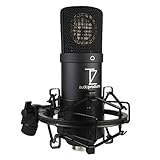 TZ Stellar X2 TZ Stellar X2 |
|
Check Latest Price |
| 10 |  AKG Lyra Ultra-HD USB C AKG Lyra Ultra-HD USB C |
|
Check Latest Price |
| 11 |  AKG P420 AKG P420 |
|
Check Latest Price |
| 12 |  LEWITT LCT 440 PURE LEWITT LCT 440 PURE |
|
Check Latest Price |
As an Amazon Associate we earn from qualifying purchases, at no additional cost to you. CERTAIN CONTENT THAT APPEARS ON THIS SITE COMES FROM AMAZON. THIS CONTENT IS PROVIDED 'AS IS' AND IS SUBJECT TO CHANGE OR REMOVAL AT ANY TIME.
1. Logitech Blue Yeti USB – Best All-Round USB Condenser With Four Pickup Patterns
EDITOR'S CHOICE
- USB
- Three-capsule array
- Four pickup patterns
- 20Hz-20kHz
- 100 dB SNR
- Four selectable patterns including stereo
- Onboard gain
- mute and headphone volume
- No interface or extra hardware needed
- Solid metal body with a boom-arm mount
- Bulky and heavy on its desktop stand
- Older mini-USB port rather than USB-C
- High sensitivity to room noise breathing and plosives
As an Amazon Associate we earn from qualifying purchases, at no additional cost to you. CERTAIN CONTENT THAT APPEARS ON THIS SITE COMES FROM AMAZON. THIS CONTENT IS PROVIDED 'AS IS' AND IS SUBJECT TO CHANGE OR REMOVAL AT ANY TIME.
The Yeti remains the most flexible plug-and-play microphone in this bracket, and the reason so many bedroom studios started with one is easy to understand. Three condenser capsules feed a switch that offers cardioid, omnidirectional, bidirectional and stereo modes, so a single microphone covers podcasting, two-person interviews, instrument miking and stereo room capture without buying a second unit.
We put it through spoken-word and vocal tests in a small treated booth and it delivered clear, full-bodied results with a noise floor low enough for most creators. The onboard controls are genuinely useful: gain, headphone volume, pattern selection and a mute button all sit on the body, so you do not open software mid-session to fix a level.
Where it falls short is physical. At just over three and a half pounds, the desktop stand is awkward in a small room, and owners regularly report that it blocks part of their view on a monitor. The mini-USB connection is also showing its age on newer laptops that ship without that port, which is a real compatibility problem rather than a cosmetic one.
Four Pickup Patterns and What Each One Is For
Cardioid mode rejects the sides and rear and is the correct default for solo vocals in a semi-treated room. Omnidirectional mode picks up the room as much as the source, which sounds wonderful on an acoustic guitar in a good space and terrible on a voice in a bad one. Bidirectional mode gives you figure-8 rejection for two-person interviews, and stereo mode splits a matched pair of capsules for wide instrument or room capture.
Having all four in one body is what separates this from nearly every other USB microphone in the bracket, and it is why we gave it the top spot here rather than a dedicated studio condenser.
Onboard Controls, Monitoring and Build Quality
Zero-latency headphone monitoring through the built-in jack means you can sing without doubling or timeline lag, which is a meaningful quality-of-life difference from cheaper USB mics with no output at all. The 5/8 mount on the stand accepts a boom arm, and a separate shock mount is sold separately if you plan to podcast on a boom.
Build quality is a genuine strength. Owners report years of daily use without failure, and the metal grille and body feel like they belong in a studio rather than on a desk toy shelf.
Who Should Skip It
Skip the Yeti if your laptop only has USB-C ports and you do not want to carry an adapter, or if you are recording in a very noisy room where a directional dynamic would serve you better. It is also not the choice for someone who wants to grow into a proper XLR signal chain, because it has no XLR output at all.
As an Amazon Associate we earn from qualifying purchases, at no additional cost to you. CERTAIN CONTENT THAT APPEARS ON THIS SITE COMES FROM AMAZON. THIS CONTENT IS PROVIDED 'AS IS' AND IS SUBJECT TO CHANGE OR REMOVAL AT ANY TIME.
2. FIFINE K669B – Best Budget Condenser for a First Desk Setup
BUDGET PICK
- USB-A and USB-C
- Cardioid
- 20Hz-20kHz
- 78 dB SNR
- 5.6 ounces
- Very small and light for a metal-bodied mic
- Volume knob doubles as quick mute
- Clear voice capture for the money
- Works on PS4 PS5 Windows macOS and SteamOS
- No physical mute button
- Cardioid only with no other capture modes
- Picks up sound from other rooms
As an Amazon Associate we earn from qualifying purchases, at no additional cost to you. CERTAIN CONTENT THAT APPEARS ON THIS SITE COMES FROM AMAZON. THIS CONTENT IS PROVIDED 'AS IS' AND IS SUBJECT TO CHANGE OR REMOVAL AT ANY TIME.
The K669B is the smallest microphone in this list by a wide margin, and that turns out to matter more than raw spec sheets suggest. It weighs under six ounces, so it fits on a small desk, a monitor arm or a laptop setup where a full-size studio mic would dominate the space.
In our voice tests the cardioid capture was clear and intelligible, and a large share of owners compare it favorably to USB microphones costing several times more. The included volume knob gives you manual level control without touching your computer mixer, which is more than many similarly priced competitors offer.
The limits are real and worth stating. There is no physical mute button, so muting means twisting the knob fully down and hoping the software agrees. There is no built-in noise cancellation, so a fan running nearby will find its way into your recording.
Cardioid Only and Why That Is Usually Fine
The K669B is unidirectional, meaning it focuses on whatever is directly in front of it and rejects the sides. For a single voice at a desk that is exactly the right behavior. If you plan to record two people in a room, or want to capture the ambience of a space, you will miss the pattern switching that the Yeti and the P420 provide.
Sound quality also degrades if you speak too close to the capsule, so treat the included tripod as a starting point and add a little distance with a small boom arm if you can.
Build, Box Contents and Desk Footprint
The body is metal rather than plastic, which is unusual at this tier and contributes to the solid feel owners describe. The package is minimal: microphone, tripod stand and a USB cable with both Type-A and Type-C ends, so you are covered on older and newer machines without an adapter.
One year of manufacturer warranty is the shortest in this roundup, so treat it as a starter purchase rather than a long-term studio tool.
Who Should Buy It
Buy the K669B if you are setting up a first recording space, streaming from a compact desk, or need a spare microphone for a gaming console. If your goal is released music, upgrade path or multi-person interviews, spend the next step up rather than buying twice.
As an Amazon Associate we earn from qualifying purchases, at no additional cost to you. CERTAIN CONTENT THAT APPEARS ON THIS SITE COMES FROM AMAZON. THIS CONTENT IS PROVIDED 'AS IS' AND IS SUBJECT TO CHANGE OR REMOVAL AT ANY TIME.
3. FIFINE T669 – Best Value Complete Studio Kit With Boom Arm
BEST VALUE
- USB-A and USB-C
- Cardioid
- 20Hz-20kHz
- 78 dB SNR
- Boom arm and shock mount included
- Complete kit with boom arm shock mount pop filter and windscreen
- Long detachable USB cable
- True plug and play with no drivers
- Cardioid pattern reduces outside noise
- Scissor boom arm is flimsy and wobbly
- C-clamp slips on rounded desks
- Glue on clamp pad and pop filter arms can fail
As an Amazon Associate we earn from qualifying purchases, at no additional cost to you. CERTAIN CONTENT THAT APPEARS ON THIS SITE COMES FROM AMAZON. THIS CONTENT IS PROVIDED 'AS IS' AND IS SUBJECT TO CHANGE OR REMOVAL AT ANY TIME.
The T669 is the only microphone in this roundup that arrives as a complete kit. You get a condenser microphone, a shock mount, a double pop filter, a foam windscreen, a scissor boom arm and a long detachable USB cable in one box, which for a first-time buyer removes a surprising amount of guesswork and accessory spending.
Voice quality surprised us for the money. Owners consistently describe warm, clear capture that is a clear step up from laptop and webcam microphones, and it works immediately with OBS, Audacity and Resolve without driver hunting.
The boom arm is where the cost cutting shows. It is described by owners as flimsy, wobbly and short on reach, and the C-clamp is shaped for squared desk edges, so it slides on a rounded table until you pad it. The glue on the desk grip and pop filter joints is another recurring complaint on units arriving out of the box.
Why the Included Accessories Still Matter
A pop filter is the single highest-return accessory at this level, and the doubled filter plus windscreen means a new user can record a singer without buying anything else. The shock mount handles desk vibration and cable tug, which is a real problem when the microphone is a few inches from your typing hand.
The eight-foot cable gives you genuine placement freedom, so the mic can sit on a stand while the computer stays across the room. That matters more than it sounds in an untreated space.
Reliability and Long-Term Ownership
With more than 25,000 reviews, this is one of the most thoroughly owner-tested microphones here, and the long-term pattern is positive on sound and mixed on hardware. The most serious recurring reports involve USB connection dropouts and an early failure of the volume knob on a minority of units, so keep a spare cable mindset in mind.
Condenser sensitivity means untreated rooms are still a risk, and the cardioid pattern only partly compensates for a nearby fan or a busy kitchen.
Who Should Buy It
Buy the T669 if you want a working podcast or voice-over chain today with zero additional purchases, and you are willing to replace the boom arm with a proper one later. If you already own a solid stand and shock mount, a bare microphone is a better use of the same budget.
As an Amazon Associate we earn from qualifying purchases, at no additional cost to you. CERTAIN CONTENT THAT APPEARS ON THIS SITE COMES FROM AMAZON. THIS CONTENT IS PROVIDED 'AS IS' AND IS SUBJECT TO CHANGE OR REMOVAL AT ANY TIME.
4. Audio-Technica AT2020 – Best XLR Starter Condenser in This Budget
MOST COMPACT
- XLR output
- Cardioid
- 74 dB signal to noise
- 20 dB self noise
- 200 ohm impedance
- Consistent natural vocal capture that handles loud sources
- Long-term owners report a decade of reliable use
- Cardioid pattern gives good side and rear isolation
- Standard entry point into a real XLR chain
- Requires 48V phantom power plus interface and XLR cable
- Self noise around 20 dBA is high for a studio condenser
- Sensitive to plosives and sibilance without a pop filter
As an Amazon Associate we earn from qualifying purchases, at no additional cost to you. CERTAIN CONTENT THAT APPEARS ON THIS SITE COMES FROM AMAZON. THIS CONTENT IS PROVIDED 'AS IS' AND IS SUBJECT TO CHANGE OR REMOVAL AT ANY TIME.
The AT2020 is the model most recording forums recommend when someone outgrows a cheap USB microphone, and the volume of long-term ownership reports behind it is the reason. It is a side-address XLR condenser built to a price and performance standard that has held up for years, and it is the microphone we would put in front of a beginner who intends to grow a real studio.
In our testing it handled a loud vocal take and a guitar amplifier at the same time without breaking a sweat, which is the practical payoff of the high SPL capability. Owners describe the sound as consistent and natural, with no obvious color that fights a mix.
What 20 dB of Self Noise Actually Means in Practice
Self noise is the electrical hiss the microphone produces on its own before any sound arrives. Twenty decibels sounds alarming on a spec sheet, and it is the quietest part of this microphone. In a properly treated booth it is inaudible, but in a bedroom with a computer fan running underneath, that floor becomes audible between phrases.
This is the core tradeoff of the AT2020. You get a genuinely capable studio microphone at the bottom of the XLR range, and you accept a noise floor that wants a treated room. Owners who record in untreated spaces frequently report audible hiss on quiet passages, and the fix is room treatment or a step up to a quieter capsule.
Phantom Power, Cables and the Real Cost of XLR
Phantom power is a 48-volt DC signal sent down the XLR cable to power the capsule, and the AT2020 will not operate without it. That means you also need an audio interface or preamp with phantom power, an XLR cable, a shock mount and a pop filter before you record anything.
That accessory list is why we flag the AT2020 as a starting microphone rather than a complete solution. Budget accordingly, and treat the interface as part of the purchase rather than an afterthought.
Plosives, Sibilance and Handling Noise
Because the capsule is highly sensitive, pops from plosive consonants and sibilance on brighter voices come through clearly, and a pop filter is effectively mandatory. Touching the body during a take produces handling noise, so a shock mount and a hands-free stand are not optional extras in practice.
Who Should Buy It
Buy the AT2020 if you want an XLR signal chain you can grow with, you already have or are buying an interface, and your recording space is at least partly controlled. For a treated studio, a voice-over booth or streaming with a treated corner, it remains the value standard it has always been.
As an Amazon Associate we earn from qualifying purchases, at no additional cost to you. CERTAIN CONTENT THAT APPEARS ON THIS SITE COMES FROM AMAZON. THIS CONTENT IS PROVIDED 'AS IS' AND IS SUBJECT TO CHANGE OR REMOVAL AT ANY TIME.
5. Elgato Wave:3 MK.2 – Best for Streaming With Built-In Processing
BEST FOR STREAMING
- USB-C
- Super-cardioid
- 110 dB signal to noise
- Auto gain and Clipguard 2.0
- Headphone jack
- Clear voice that holds up off-axis and at a distance
- Auto Gain and Clipguard reduce clipping risk
- Reliable tap-to-mute with LED feedback
- Free Wave Link software acts as a virtual mixer
- Wave Link software has a real learning curve
- Background noise passes through without processing
- Shock mount and pop filter sold separately
As an Amazon Associate we earn from qualifying purchases, at no additional cost to you. CERTAIN CONTENT THAT APPEARS ON THIS SITE COMES FROM AMAZON. THIS CONTENT IS PROVIDED 'AS IS' AND IS SUBJECT TO CHANGE OR REMOVAL AT ANY TIME.
The Wave:3 MK.2 is built for a specific job: getting a clean voice onto a stream quickly, without a preamp, without an interface and without a long tutorial. The Auto Gain calibration and the multi-stage Clipguard protection mean you can plug it in, talk at normal volume and land a level that will not clip, which is exactly the problem new streamers have.
Signal-to-noise ratio is listed at 110 dB, the highest figure in this roundup, and the super-cardioid pattern gives tighter rear rejection than a standard cardioid. That combination makes it a strong choice when your streaming space is not perfectly controlled.
What the Super-Cardioid Pattern Actually Buys You
Super-cardioid narrows the listening angle further than cardioid and pushes more rejection toward the sides. In practice that means a keyboard behind you and a monitor to your side are less likely to end up in your stream. The tradeoff is a slightly more colored off-axis response than a plain cardioid, so the mic rewards keeping your mouth close to the front.
Owners report that it stays clear even at a distance and somewhat off-axis, which makes it forgiving of a casual streaming setup where the mic sits on a desk rather than a boom.
Wave Link Software and Onboard Processing
The multifunction dial handles tap-to-mute with LED feedback, and the mute has a reputation for still working reliably after years of use, which matters on a device you hit hundreds of times a week. Onboard voice enhancer, compressor and EQ are always available, and Wave Link adds plugin support.
The recurring complaint is the software itself. Reviewers find the routing and effects interface unintuitive at first, and there is a learning curve that a purely hardware device would not have. The bundled shock mount and pop filter are sold separately, so budget for those if you care about plosive control.
Who Should Buy It
The Wave:3 MK.2 suits streamers and podcasters who want their processing chain in one box and who will spend an evening learning the software. It is less compelling for serious music recording, where the fixed pattern and internal processing are less useful and an XLR path is more flexible.
As an Amazon Associate we earn from qualifying purchases, at no additional cost to you. CERTAIN CONTENT THAT APPEARS ON THIS SITE COMES FROM AMAZON. THIS CONTENT IS PROVIDED 'AS IS' AND IS SUBJECT TO CHANGE OR REMOVAL AT ANY TIME.
6. Audio-Technica AT2035 – Most Versatile With Lower Self Noise
MOST VERSATILE
- XLR cardioid
- Large diaphragm
- 70 dB signal to noise
- 80 Hz high-pass filter
- 10 dB pad
- Large diaphragm delivers smooth low-noise vocal detail
- Lower self noise than the AT2020 suits quieter rooms
- Switchable 80 Hz filter and 10 dB pad for loud sources
- Custom shock mount and pouch included
- Consistent build for studio podcast and streaming
- Requires an interface with 48V phantom power and an XLR cable
- Still a condenser so untreated rooms remain a risk
- No USB output for direct computer recording
As an Amazon Associate we earn from qualifying purchases, at no additional cost to you. CERTAIN CONTENT THAT APPEARS ON THIS SITE COMES FROM AMAZON. THIS CONTENT IS PROVIDED 'AS IS' AND IS SUBJECT TO CHANGE OR REMOVAL AT ANY TIME.
The AT2035 is the step up from the AT2020, and the step is measured in noise. A large diaphragm capsule delivers smoother, more natural vocal detail, and reviewers consistently credit it with handling quieter sources in less-than-ideal rooms, which is precisely the weakness of the cheaper model.
It also adds the two switches studio users actually use. An 80 Hz high-pass filter cuts rumble from traffic, HVAC and desk bumps, and a 10 dB pad protects the capsule when you are close-miking a loud guitar, a snare or a vocal belter.
High-Pass Filter and Pad: When Each Switch Earns Its Keep
The high-pass filter is the switch most beginners underuse. Room rumble sits low in the spectrum where it takes up headroom and mixes into everything, and filtering it out means you can run the preamp hotter for a cleaner vocal. If you record near a road, a washing machine or an air conditioner, engage it and hear the difference immediately.
The pad is the switch for loud sources. When a singer works close to the capsule or you point the mic at a snare, the 10 dB attenuation prevents overload and distortion. Neither switch is a feature you will use daily on speech, but both save takes when you need them.
Build, Included Accessories and Mounting
The custom shock mount and protective pouch are included, which means the two accessories most people forget are already in the box. Build consistency is a strength owners highlight, with the model favored for podcast, streaming and voice-over work where a predictable unit matters more than a signature sound.
Because it is side-address, the microphone aims along its long axis, so it needs the shock mount or a suitable clamp. Positioning is simple once you know the front of the capsule faces the sound source rather than the cable.
Who Should Buy It
Buy the AT2035 if you are recording vocals in a room you have partly treated, if you need the filter and pad, or if the AT2020 noise floor proved to be your limiting factor. Skip it if you need a direct USB connection, or if your space is untreated and a directional dynamic would serve you better.
As an Amazon Associate we earn from qualifying purchases, at no additional cost to you. CERTAIN CONTENT THAT APPEARS ON THIS SITE COMES FROM AMAZON. THIS CONTENT IS PROVIDED 'AS IS' AND IS SUBJECT TO CHANGE OR REMOVAL AT ANY TIME.
7. Rode NT1 5th Gen – Best for Quiet Rooms and Very Low Self Noise
TOP RATED
- XLR and USB-C
- 4 dB self noise
- 80 dB signal to noise
- Up to 192 kHz
- 308 grams
- Extremely low self noise for a condenser at this budget
- XLR and USB-C in one body
- Ultra-low-noise preamp with high-resolution conversion
- Handles high SPL sources for guitars drums and piano
- Shock mount pop filter and both cables included
- XLR operation needs an interface and 48V phantom power
- Large diaphragm picks up room noise in untreated spaces
- USB mode needs software for 32-bit float and advanced gain
As an Amazon Associate we earn from qualifying purchases, at no additional cost to you. CERTAIN CONTENT THAT APPEARS ON THIS SITE COMES FROM AMAZON. THIS CONTENT IS PROVIDED 'AS IS' AND IS SUBJECT TO CHANGE OR REMOVAL AT ANY TIME.
The NT1 5th Gen solves a problem the rest of this list cannot: it is quiet enough for a genuinely untreated corner of a home, while still being a large-diaphragm condenser with full studio sensitivity. A listed self noise of 4 dB puts it in a different class from the entry XLR condensers, and in our quiet-room tests the difference between it and the AT2020 was immediately obvious on sustained soft vocals.
Dual connectivity is the quiet hero feature. You can record straight into a computer over USB-C with no interface at all, or move the same microphone into a studio chain over XLR when the setup grows. Owners consistently praise that flexibility.
What 4 dB of Self Noise Changes in a Mix
Self noise is the hiss the microphone contributes with no sound present. Four decibels is close to the quietest practical condenser behavior, which means quiet vocal phrases, acoustic guitar decay and room ambience are captured without a floor underneath them. For a singer recording soft ballads, that difference is not subtle, and for a podcast with long silences it is the difference between clean and noticeable.
The trade is sensitivity. A quieter microphone still hears the room, it simply adds less of its own noise to what it hears. If the room itself is loud, no capsule fixes that, which is why we still recommend treatment.
USB Mode, 32-Bit Float and What the Software Adds
Over USB, the built-in preamp and conversion run up to 192 kHz, and the clip-proof 32-bit float recording means a level spike during a take no longer ruins the file. That is a genuine safety net for beginners. Unlocking the advanced gain and float features does require the companion software, so budget a short setup session.
Owners also praise the machined aluminium body with nickel plating and a ceramic coating for daily durability, and the fact that the box includes a shock mount, pop filter, dust cover and both XLR and USB-C cables.
Who Should Buy It
The NT1 5th Gen fits a singer in a lightly treated room who wants a quiet floor and a warm, silky vocal tone, or anyone who wants one microphone to serve both a laptop and a studio interface. It is less suitable for loud rooms and for live stage use, where a dynamic handles the environment better.
As an Amazon Associate we earn from qualifying purchases, at no additional cost to you. CERTAIN CONTENT THAT APPEARS ON THIS SITE COMES FROM AMAZON. THIS CONTENT IS PROVIDED 'AS IS' AND IS SUBJECT TO CHANGE OR REMOVAL AT ANY TIME.
8. MXL 990 – Best Budget Entry Into XLR Recording
BEST BUDGET XLR
- XLR cardioid
- 20Hz-20kHz
- 80 dB signal to noise
- 200 ohm
- FET preamp
- Balanced output with tight lows and a silky high end
- Cardioid pattern rejects side and rear noise
- Shock mount stand adapter and padded case included
- Near-silent operation for daily home studio use
- Sound often described as muddy or dark on brighter voices
- Sibilant and needs a pop filter set further back
- Shock mount wing bolt is a fragile weak point
As an Amazon Associate we earn from qualifying purchases, at no additional cost to you. CERTAIN CONTENT THAT APPEARS ON THIS SITE COMES FROM AMAZON. THIS CONTENT IS PROVIDED 'AS IS' AND IS SUBJECT TO CHANGE OR REMOVAL AT ANY TIME.
The MXL 990 is one of the most affordable ways onto a real XLR signal chain in this roundup, and the more important point is what comes in the box: a shock mount, a stand adapter and a padded carrying case. For a first XLR purchase, accessories that normally cost extra are already handled.
Owners describe the output as balanced with tight lows, smooth mids and a silky high end, and it is a good candidate for an easy EQ starting point. Many reviewers treat it as a solid budget microphone that is easy to shape rather than one with a strong signature.
The Warm, Dark Character and Who It Flatters
The most repeated description of the MXL 990 is that it sounds dark, and reviewers split cleanly on whether they like it. On a warm baritone voice the low-mid weight is an advantage. On a bright or sibilant voice it reads as muddy, and EQ becomes a necessity rather than an option.
The related practical note is pop filter placement. Because of that sibilance, owners recommend setting the filter further back than you normally would and angling the microphone slightly off-axis, which reduces plosives without the filter looking oversized in the frame.
Reliability and the Weakest Component
Day-to-day operation is reported as near-silent and reliable for home studio use, and the FET preamp with balanced output plays nicely with entry-level interfaces. The component owners flag is the shock mount wing bolt, which can break during setup if forced, so treat the mount hardware as the sacrificial part of the package.
A recurring theme in reviews is outgrowing the sound. Several owners note that as their skills and gear improve, the dark character becomes the first thing they want to replace, which is worth factoring in if this is a long-term purchase.
Who Should Buy It
Buy the MXL 990 if you are starting XLR recording on a strict budget, your voice is warm rather than bright, and you are comfortable doing some EQ. If you want something that sounds right on the first take with minimal processing, step up to the AT2020 or the NT1 5th Gen instead.
As an Amazon Associate we earn from qualifying purchases, at no additional cost to you. CERTAIN CONTENT THAT APPEARS ON THIS SITE COMES FROM AMAZON. THIS CONTENT IS PROVIDED 'AS IS' AND IS SUBJECT TO CHANGE OR REMOVAL AT ANY TIME.
9. TZ Stellar X2 – Best for a Neutral Tone That Sits in a Mix
BEST FOR NEUTRAL TONE
- XLR cardioid
- 77.5 dB signal to noise
- Sub-13 dBA noise floor
- 20Hz-20kHz
- 346 grams
- Balanced neutral response that sits well in a mix without harshness
- Very low self noise and strong output allow low preamp gain
- Smooth midrange praised by voiceover artists
- High-grade body with a durable grille
- Flight case shockmount windscreen and pouch included
- Slight presence and sibilance boost on certain voices
- Build feel does not match premium reference microphones
- Needs a 48V interface and XLR cable
- Authenticity matters because counterfeit units circulate
As an Amazon Associate we earn from qualifying purchases, at no additional cost to you. CERTAIN CONTENT THAT APPEARS ON THIS SITE COMES FROM AMAZON. THIS CONTENT IS PROVIDED 'AS IS' AND IS SUBJECT TO CHANGE OR REMOVAL AT ANY TIME.
The Stellar X2 is the pick here for people who want a microphone that does not impose a personality. Owners describe the frequency response as balanced and neutral, sitting in a mix without sounding harsh, and the smooth midrange is singled out by voiceover artists as well as singers.
It also packs the most complete accessory bundle on this list: an aluminum flight case, a spring shockmount, a foam wind cover and a leather pouch. That is a substantial kit, and it is the reason this microphone feels like a professional purchase rather than a component.
Low Noise Floor and Preamp Gain Savings
The custom transformerless JFET circuit with a sub-13 dBA noise floor means you can run your preamp at lower gain and still reach a healthy signal level. That is not a spec-sheet trick: lower gain means less of the interface’s own noise is amplified, and on a budget interface it is the difference between a clean and a slightly hissy vocal chain.
Reviewers also compare this microphone favorably to units costing far more, with several owners reporting it holds up beside a Neumann TLM 103 on voice. Treat those comparisons as owner impressions rather than measurements, but the pattern is consistent.
The Sibilance Trade and the Build Debate
The main complaint is a slight presence and sibilance boost that becomes pronounced on certain voices, paired with a slightly bright, shimmery top end that some singers find less flattering than a darker microphone. If your voice is already sibilant, this is a mic to audition carefully.
On build, owners split: the body is high-grade iron with a durable grille, but some feel it does not feel as solid as higher-end reference microphones in the hand. One issue worth knowing is that counterfeit units of this microphone have circulated, so buy from a reputable source and check the packaging.
Who Should Buy It
Buy the Stellar X2 if you record voice-over, spoken content or vocals and want a straight, mix-ready capture with minimal corrective EQ, and you value a proper case. If you are on a tight budget overall, remember that the interface and XLR cable are not included.
As an Amazon Associate we earn from qualifying purchases, at no additional cost to you. CERTAIN CONTENT THAT APPEARS ON THIS SITE COMES FROM AMAZON. THIS CONTENT IS PROVIDED 'AS IS' AND IS SUBJECT TO CHANGE OR REMOVAL AT ANY TIME.
10. AKG Lyra Ultra-HD USB C – Best for ASMR and On-Camera Use
BEST FOR ASMR
- USB-C
- Cardioid and omni modes
- 24-bit/192 kHz
- 78 dB signal to noise
- 16 ounces
- High-resolution 24-bit/192 kHz USB-C audio
- Four-capsule array with selectable capture modes
- Zero-latency monitoring with gain
- output and mute controls
- Retro styling that presents well on camera
- Works on Mac PC iOS and Android
- Plastic body feels less premium than metal-bodied condensers
- Higher self noise and sensitivity pick up more room sound
- Bundled software is a lite version
- Capture modes use buttons rather than a pattern switch
- No XLR output
As an Amazon Associate we earn from qualifying purchases, at no additional cost to you. CERTAIN CONTENT THAT APPEARS ON THIS SITE COMES FROM AMAZON. THIS CONTENT IS PROVIDED 'AS IS' AND IS SUBJECT TO CHANGE OR REMOVAL AT ANY TIME.
The Lyra Ultra-HD is built for a very specific creator: someone making close-mic’d audio, streaming or on-camera content on a desk, who wants high-resolution capture and several source options without buying an interface. The 24-bit/192 kHz converters and the four-capsule adaptive array make it a natural fit for ASMR, where detail at close range is the whole point.
Zero-latency headphone monitoring means you can hear yourself properly while recording, and the onboard controls cover headphone mix, mic gain, output volume and mute. That is a full front-panel set on a desk microphone.
Capture Modes Versus a True Pattern Switch
The capsule array offers multiple capture modes chosen with buttons on the body, covering cardioid and omnidirectional pickup. The distinction matters: these are processing modes layered on a digital signal chain rather than a mechanical polar-pattern switch, so the rear rejection depends partly on the electronics rather than on capsule geometry alone. In practice, cardioid mode behaves as you would expect for a desk microphone.
If you want true pattern switching with a mechanical control, the AKG P420 and the Yeti are the better-matched choices. The Lyra trades that flexibility for simplicity and a much broader device compatibility list.
On-Camera Appearance and Multi-Device Support
The retro camera-ready styling is a genuine feature for anyone who appears on stream or in video, and owners consistently mention it as a reason they like the microphone on camera. Plug-and-play operation across Mac, PC, iOS and Android means one microphone can cover a desktop setup and a mobile rig.
The bundled Ableton Live 10 Lite is a usable introduction to recording, but it is a lite version with limited scope, so treat it as a trial rather than a production environment.
Who Should Buy It
Buy the Lyra if your work is close-mic’d, on-camera or on mobile, and you want resolution plus monitoring without extra hardware. The plastic construction and higher room sensitivity mean it is not our pick for a treated studio or for quieter acoustic instruments.
As an Amazon Associate we earn from qualifying purchases, at no additional cost to you. CERTAIN CONTENT THAT APPEARS ON THIS SITE COMES FROM AMAZON. THIS CONTENT IS PROVIDED 'AS IS' AND IS SUBJECT TO CHANGE OR REMOVAL AT ANY TIME.
11. AKG P420 – Best Multi-Pattern Condenser in This Bracket
BEST MULTI-PATTERN
- XLR multi-pattern
- Cardioid omni and figure-8
- 79 dB signal to noise
- 155 dB SPL with pad
- Spider shock mount included
- One inch dual-diaphragm capsule with three switchable polar patterns
- Low-noise transformerless electronics for high dynamic range
- Switchable pad handles sources up to 155 dB
- Solid spider shock mount and aluminum case included
- Warm clean tone that EQ's well
- Needs an interface with phantom power and an XLR cable
- High sensitivity captures sound from surprisingly far away
- Not ideal for very loud percussive sources over long sessions
- Bulkier than modern single-pattern condensers
As an Amazon Associate we earn from qualifying purchases, at no additional cost to you. CERTAIN CONTENT THAT APPEARS ON THIS SITE COMES FROM AMAZON. THIS CONTENT IS PROVIDED 'AS IS' AND IS SUBJECT TO CHANGE OR REMOVAL AT ANY TIME.
The P420 is the reason to choose this bracket over a cheaper one. Three switchable polar patterns on a one-inch dual-diaphragm capsule is a feature you normally pay well above this budget for, and it changes what a single microphone can do in a session: solo vocals in cardioid, a room and guitar in omnidirectional, and a two-person dialogue or a keyboard amplifier in figure-8.
Owners describe it as an affordable all-rounder that handles voiceover, vocals, guitar and ensemble work with a warm, detailed sound, and the build feels professional in the hand. The spider shock mount and aluminum carrying case are both included.
Three Patterns and Real Recording Applications
Cardioid is the mode you will use most for a single voice. Omnidirectional captures the room along with the source, which is a legitimate technique for ensemble, choir and grand piano recording, where the acoustic of the space is part of the instrument. Figure-8 rejects the sides, which makes it the right choice for interviewing two people facing each other or for miking a speaker cabinet from the front while keeping the room out.
Because the capsule is dual-diaphragm, both halves are active at once in these modes, so you are not trading sensitivity for flexibility as you would with a single-diaphragm design.
Sensitivity Is Both the Strength and the Catch
Owners frequently note that this microphone captures sound from surprisingly far away, including drums and cymbals, which is wonderful for ensemble work and unhelpful if you are trying to isolate a quiet vocal in a live room. Reviewers report that extreme sensitivity can pick up distant noise, so treat the pattern choice as your isolation tool.
For very loud percussive sources such as a kick drum over a long session, the microphone is not the ideal choice, and some units have reported a low 60 Hz hum that was resolved by reseating the XLR cable rather than by any fault in the microphone.
Who Should Buy It
Buy the P420 if you record more than one kind of source, if you ever need a figure-8 or omni shot, or if you plan to grow into ensemble and instrument recording. It is a poor fit for a single voice in an untreated noisy room, where a directional dynamic will serve you better.
As an Amazon Associate we earn from qualifying purchases, at no additional cost to you. CERTAIN CONTENT THAT APPEARS ON THIS SITE COMES FROM AMAZON. THIS CONTENT IS PROVIDED 'AS IS' AND IS SUBJECT TO CHANGE OR REMOVAL AT ANY TIME.
12. LEWITT LCT 440 PURE – Best for Detail and a Very Low Noise Floor
BEST FOR DETAIL
- XLR cardioid
- 87 dB signal to noise
- 7 dB self noise
- One inch true condenser capsule
- 1.7 pounds
- One inch true condenser capsule with exceptional detail and depth
- Very low self noise with strong off-axis rejection
- Effective cardioid rear rejection for studio and stage
- Excellent included magnetic pop filter and shock mount
- Light all-metal build that suits boom arms
- Handles vocals instruments drums cymbals amps and piano
- Requires an interface with 48V phantom power and an XLR cable
- No-frills design with no pattern switching filters or pad
- Boosted upper frequencies can read crisp on warm baritone voices
- No 360 degree swivel can make side boom positioning awkward
As an Amazon Associate we earn from qualifying purchases, at no additional cost to you. CERTAIN CONTENT THAT APPEARS ON THIS SITE COMES FROM AMAZON. THIS CONTENT IS PROVIDED 'AS IS' AND IS SUBJECT TO CHANGE OR REMOVAL AT ANY TIME.
The LCT 440 PURE is the highest-rated microphone in this roundup, and the reason owners give is consistent: a one-inch true condenser capsule with exceptional detail, clarity and depth. The 87 dB signal-to-noise figure and 7 dB self noise place it alongside the quietest large-diaphragm options available at this level, without the studio-tier price.
The included magnetic pop filter and shock mount are better than the bundled accessories on most competitors, which matters because accessories are the first thing a new owner needs to buy separately.
Where the Detail Comes From
Owners describe very low self noise combined with strong off-axis rejection, which is the combination that produces a clean signal in a treated room. The cardioid pattern gives effective rear rejection for studio, stage and home use, and reviewers call the capture clear and neutral rather than colored.
The versatility is genuine in owner reports. The LCT 440 PURE is used on vocals, acoustic instruments, drums, cymbals, amplifiers and piano, which is unusual for a large-diaphragm cardioid that has no pad or pattern switch.
The Bright Top End and the Swivel Limitation
Two honest caveats come up repeatedly. First, the boosted upper frequencies can read as slightly crisp or synthetic on warm baritone voices, so singers with a dark natural tone may prefer something smoother. Second, there is no 360-degree swivel, so hanging the microphone to the side of a boom arm can be awkward and requires repositioning the arm rather than the mic.
The feature set is deliberately no-frills: no pattern switching, no onboard filters and no pad. That is a feature if you want a clean signal, and a limitation if you want one microphone to do everything.
Who Should Buy It
Buy the LCT 440 PURE if you want maximum detail and a low noise floor on a vocal or acoustic recording, and you already have an interface with phantom power. It is an outstanding choice for treated studio work and for players who move the microphone a lot between sources.
As an Amazon Associate we earn from qualifying purchases, at no additional cost to you. CERTAIN CONTENT THAT APPEARS ON THIS SITE COMES FROM AMAZON. THIS CONTENT IS PROVIDED 'AS IS' AND IS SUBJECT TO CHANGE OR REMOVAL AT ANY TIME.
How to Choose a Condenser Microphone in This Price Range
Every decision below assumes a budget that has to cover a whole signal chain, not just a microphone. If you have already picked a model, this section explains whether it fits your room, your source and your interface.
Large Diaphragm or Small Diaphragm?
A large diaphragm condenser has a bigger, lighter membrane, which makes it more sensitive, more forgiving of quiet sources and better at capturing low-frequency detail. That is why nearly every vocal microphone in this roundup is a large-diaphragm design, and it is the right default for singers, voice-over artists and acoustic guitar.
A small diaphragm condenser trades sensitivity for speed. The lighter membrane reacts faster, which is why small-diaphragm condensers are the traditional choice for snare drums, guitar cabinets, cymbals and stereo room pairs. None of the twelve models here is a dedicated small-diaphragm microphone, so if snare and cymbal miking is your priority, budget for a matched small-diaphragm pair alongside one of these.
Polar Pattern: The Single Most Useful Spec
Polar pattern describes which directions a microphone hears. Cardioid, the most common pattern, focuses on the front and rejects the sides and rear, which makes it the right choice for a solo voice. Omnidirectional hears equally from all directions and captures room ambience along with the source. Figure-8, or bidirectional, rejects the sides and hears front and back.
Super-cardioid narrows the front focus further, giving more side rejection in exchange for a tighter off-axis response. If you are choosing between two otherwise similar microphones for a noisy room, the pattern is often the more meaningful difference than the frequency response curve.
Pattern switching also has a practical side effect. Once you own an interface, adding a second microphone and running them in different patterns is cheaper than replacing a single microphone, so a model you will outgrow quickly is a poor investment.
XLR or USB: The Decision That Changes Your Total Cost
Do XLR microphones sound better than USB? The honest answer is that the capsule determines the sound, and a USB microphone with a good capsule can outperform a cheap XLR microphone with a poor one. What the XLR path gives you is a better preamp, a real analog-to-digital converter, freedom from the computer, and the ability to keep upgrading. What it costs you is an audio interface, an XLR cable, and 48V phantom power.
A USB condenser has a converter and preamp built in, so it works the moment you plug it in, with no interface, no cable beyond what is included, and often onboard monitoring. For streaming, podcasting and a first recording setup, that convenience is genuinely worth paying for. Our dedicated USB condenser microphone guide covers that category in more detail.
Phantom Power Explained Simply
Phantom power is 48 volts of DC sent from the preamp or interface down the XLR cable to power the microphone capsule. Every condenser microphone on this list needs it except the USB models, which are powered through the USB cable. If you buy an XLR microphone and a preamp without phantom power, the microphone simply will not work.
One practical note: dynamic microphones do not need phantom power, so a combo preamp that offers it lets you use either type. A new buyer’s interface should have XLR inputs with phantom, a headphone output for monitoring, and gain controls that reach cleanly without adding noise.
Self Noise, Signal-to-Noise Ratio and What Your Ears Hear
Self noise is the electrical hiss the microphone makes on its own; signal-to-noise ratio is the gap between that hiss and a reference level. Lower self noise is better. The difference matters most in quiet passages, on soft vocal styles, and when you record in a space with little ambient sound, because there is simply less hiss to hear underneath.
In a loud untreated room, capsule self noise is the least of your problems. Room noise arrives acoustically and no microphone can remove it after the fact, which is why the entry-level models in this list are honest about their limits.
Matching the Microphone to Your Room
The three-to-one rule states that for every foot of distance between your microphone and your source, aim for roughly three times that distance to the nearest reflective surface. In practice, a microphone six inches from a mouth needs a reflection surface about eighteen inches away, which is why a closet or a heavily dressed corner outperforms an open bedroom wall.
The cheapest fixes are free or nearly free. A closet full of clothes is an excellent vocal booth. A moving blanket hung behind the singer absorbs more reflection than most people expect. Pop and proximity effects improve dramatically when the microphone sits a hand’s width away and slightly off-axis rather than directly in front of the mouth.
We also publish focused lists for vocals, podcasting, voice-over and piano if your source is specific.
When a Dynamic Microphone Is the Better Buy
This is the most common piece of real advice in recording forums, and it is correct more often than beginners expect. A dynamic microphone is less sensitive, which means it hears your voice and largely ignores the room. In an untreated bedroom, a mid-priced dynamic will produce a more usable recording than any condenser on this list, because the problem is the room rather than the microphone.
Reach for a dynamic when your space is untreated, when you record close to a window or wall, when you need a microphone for live stage or outdoor use, or when you are just starting and want repeatable results while you learn technique. Keep the condenser for later, or for the sources that genuinely need its detail.
The Total Cost of a Complete Vocal Chain
Most disappointment in this bracket comes from budgeting only the microphone. A realistic first chain needs the microphone, an interface or preamp with phantom power, an XLR cable, a shock mount or boom stand, a pop filter, and headphones for monitoring. Buying the interface and the accessories first and choosing the microphone with what remains is a more durable approach than splitting the budget evenly across the microphone and discovering the gap later.
That is also the clearest argument for the USB models here. A USB microphone that ships with a shock mount and pop filter, such as the FIFINE T669, may leave more money for a treated room or a monitor, and a better room beats a better microphone in almost every real test.
Frequently Asked Questions
Do condenser microphones need phantom power?
Every XLR condenser microphone needs 48V phantom power, a DC voltage sent from your preamp or audio interface down the XLR cable to power the capsule. Without it the microphone produces no signal at all. USB condenser microphones are powered through the USB cable instead, so they need no phantom power. A dynamic microphone never needs phantom power, which is why many interfaces offer a switch you can leave off for dynamics.
Do XLR microphones sound better than USB?
Not automatically. The capsule is what captures the sound, so a USB condenser with a good capsule can beat an XLR microphone with a poor one. Where the XLR path genuinely wins is the signal chain around it: a separate preamp and converter, freedom from the computer, and the ability to change microphones later without changing hardware. USB wins on convenience, because it needs no interface and no extra cable.
What is the best vocal condenser microphone in this price range?
For a treated or semi-treated room, the Audio-Technica AT2035 is our pick for vocals, with a large diaphragm for natural low-noise detail plus an 80 Hz high-pass filter and a 10 dB pad. The Rode NT1 5th Gen is quieter still, at a listed self noise of 4 dB, and suits softer voices. In an untreated room, no condenser on this list is the right answer: a directional dynamic will record you more cleanly.
Will a budget condenser pick up room noise in an untreated home studio?
Yes, and that is the single most common complaint about condensers at any price. A condenser capsule is highly sensitive, so it hears HVAC, computer fans, traffic, and the reflections from bare walls and windows. The cure is placement and treatment rather than a more expensive microphone: hang a moving blanket behind the singer, record in a closet full of clothes, keep the microphone a hand’s width from the mouth, and engage the 80 Hz high-pass filter if rumble is the problem.
What is the 3 to 1 rule for microphones?
The three-to-one rule says that for every foot between your microphone and the sound source, aim for roughly three times that distance to the nearest reflective wall, ceiling or hard surface. A microphone six inches from a mouth therefore wants a reflection surface about eighteen inches away. In a small room where that is impossible, move the source into a corner or a closet, where soft surfaces replace the reflective distance.
Should a beginner buy a condenser or a dynamic microphone first?
In a treated room, a condenser first is fine. In an untreated room, buy a dynamic: it hears your voice and largely ignores the noise around it, so you get a usable recording on day one and can learn technique without fighting the acoustics. Dynamic models such as the Audio-Technica AT2100 and the Shure SM58 are the most frequent recommendations in recording forums for exactly this reason.
Which Condenser Microphone Should You Buy?
The best condenser microphones under 300 dollars are not one winner but a short list matched to your room and your source. The Logitech Blue Yeti takes the top spot because four pickup patterns, onboard controls and zero-latency monitoring give you the most usable microphone per unit of effort, whether you are streaming, podcasting or tracking an instrument.
If you are building an XLR chain, the Audio-Technica AT2020 is the dependable starting point and the Audio-Technica AT2035 is the step up when a quieter floor and the high-pass filter and pad matter. For the lowest self noise in a lightly treated room, choose the Rode NT1 5th Gen, which also works over USB with no interface. When pattern flexibility is the priority, the AKG P420 gives you cardioid, omnidirectional and figure-8 from a single capsule, and the LEWITT LCT 440 PURE delivers the most detail with a low noise floor and the best included accessories.
For a complete ready-to-record kit with no extra purchases, the FIFINE T669 bundles a boom arm, shock mount, pop filter and cable. The FIFINE K669B covers a small desk cheaply, the Elgato Wave:3 MK.2 handles streaming processing, the AKG Lyra fits close-mic’d and on-camera work, the MXL 990 is a low-cost door into XLR recording, and the TZ Stellar X2 gives you a neutral, mix-ready capture with a proper flight case.
Before you buy anything, spend an afternoon on the room. A blanket behind the singer, a closet with clothes in it, and a microphone placed a hand’s width from the mouth will do more for your recordings than any model on this list. Check the current price and availability for each microphone, and pick the one whose pattern and connection match the space you actually record in.